In a well-designed kitchen, sometimes the best feature is the one you don’t even notice.
A concealed pantry door, also known as a hidden or integrated pantry door, is the ultimate blend of form and function. It keeps your pantry discreetly tucked away while maintaining the clean, uninterrupted flow of your cabinetry or wall design.
You might be aiming for a minimalist look, trying to make the most of a small space, or simply adding a creative design element. No matter the goal, a hidden pantry door brings both beauty and utility to your kitchen.
Below, we explore the most popular styles, smart design ideas, and tips to help you hide your pantry in plain sight.
What Is a Concealed Pantry Door?
A concealed pantry door is a hidden or camouflaged entrance to your pantry that blends seamlessly with the surrounding wall, cabinetry, or architectural elements.
These doors often match your kitchen cabinets, mimic wall paneling, or are built into shelving units, making the pantry practically invisible unless you know where to look.
This approach is ideal for both walk-in and reach-in pantries and is often used in modern, transitional, and minimalist kitchens where visual simplicity and clean lines are a priority.

Hidden Pantry Door Ideas
1. Cabinet-Front Pantry Door
One of the most popular and seamless concealed pantry door styles, the cabinet-front pantry door is designed to look like part of your regular kitchen cabinetry. It’s typically crafted to match your cabinet fronts in color, material, hardware, and scale, so it blends in flawlessly with the rest of your kitchen.
When closed, it may appear to be a tall pantry cupboard or an appliance panel, but it opens into a walk-in or reach-in pantry behind the scenes. Depending on your layout, you can opt for single or double doors, or even a faux cabinet panel that swings open.
To truly sell the illusion:
- Use continuous lines and matching crown molding.
- Consider a push-to-open mechanism to eliminate the need for visible handles.
- Integrate it beside your fridge or tall oven tower for a natural visual break.
Best for: Seamless design integration in modern, transitional, or traditional kitchens that prioritize symmetry and clean cabinetry lines.
2. Wall Paneling or Shiplap Door
If your kitchen includes shiplap walls, wood paneling, beadboard, or vertical slats, your pantry door can be perfectly camouflaged by continuing those materials across the entrance. These types of hidden doors create a clean, uninterrupted architectural feature while still providing full access to storage.
This method is often paired with a touch latch system so the door opens with a light push — no handles, hinges, or frames to give it away. You can also install subtle vertical grooves or custom millwork to break up the wall rhythmically, disguising where the pantry entrance begins.
To pull it off well:
- Align all panels or boards perfectly between the wall and door.
- Paint the door the same exact shade (and finish) as the wall.
- Keep baseboards and crown molding unbroken across the entire wall, including the door.
Best for: Creating a minimalist, cottage, or coastal-style feature wall with hidden functionality.
3. Bookshelf Door or Hidden Sliding Panel
For a bit of drama and surprise, turn your pantry door into a faux bookshelf or art-covered sliding panel. When closed, it looks like a decorative feature filled with cookbooks, framed art, or even wine bottles, but it cleverly conceals a fully functional pantry behind it.
A hidden bookshelf door can be hinged or pivoted, while a sliding panel can move along a barn-style or recessed track. These designs work especially well in open-concept layouts or where your pantry backs onto a dining room or hallway, rather than traditional kitchen cabinetry.
To take the concept further, you can incorporate interior lighting that automatically turns on when the door opens, making it both practical and visually impressive. Or maybe install magnetic locks to add an extra layer of security or simply helps keep curious hands at bay, ensuring your hidden pantry remains both stylish and discreet.
Best for: Statement-making kitchens, open layouts, or homes where the pantry adjoins a living space and you want to turn the entrance into a talking point.
4. Appliance-Matching Pantry Door
In high-end kitchens with integrated appliance walls, your pantry door can be cleverly disguised to match built-in refrigerators, freezer columns, or tall oven units. This creates a cohesive, uninterrupted look where every vertical surface appears to serve the same purpose until, one panel opens to reveal a hidden pantry.
To achieve this polished look:
- Use the same cabinet panels and appliance-style handles that appear on your fridge or freezer.
- Align door heights and widths so the pantry blends naturally into the appliance bank.
- Consider touch-to-open or recessed pulls for a handle-free option.
This type of design works especially well in kitchens where the pantry is adjacent to or within the main cabinet line. It’s a sleek way to hide everyday items without breaking the streamlined, built-in aesthetic.
Best for: Luxury kitchens or modern spaces with a fully integrated design scheme and flush cabinetry.
5. Pocket Door or Sliding Door Hidden in Trim
A pocket door is one of the most space-saving concealed pantry options, especially useful in smaller kitchens or narrow walkways where a swinging door might get in the way. The door slides into the wall cavity, making it disappear completely when open.
To make it truly “invisible,” finish the door in the same color, trim, or paneling as the surrounding wall. You can also use a simple groove or finger pull rather than traditional handles for a more discreet look.
If space allows, a double pocket door can provide a wider opening, perfect for walk-in pantries. Pocket doors also work well as transitions between the kitchen and adjacent utility rooms or storage areas, maintaining a smooth, unobtrusive flow throughout the home.
Best for: Compact kitchens, galley layouts, or spaces where door clearance is an issue.
6. Mirror or Chalkboard Pantry Door
Want to add functionality and personality? Turn your pantry door into a mirror, chalkboard, whiteboard, or art panel. This approach conceals your pantry while giving you a practical surface that is ideal for writing grocery lists, weekly menus, reminders, or even doodles.
A full-length mirror helps brighten small kitchens and visually expands the space. A chalkboard or dry-erase board creates an interactive element that’s great for kids, meal planners, or busy households.
Creative variations:
- Frame the board or mirror in the same trim as your cabinetry or wall paneling to help it blend in.
- Use magnetic chalkboard paint behind the panel for additional function.
- Try a gallery-style door with rotating art prints or family photos to keep the look fresh.
Best for: Family-friendly kitchens, multi-use spaces, or anyone who wants hidden storage with a functional twist.
7. Flush Hidden Door With No Trim or Handle
For a truly minimalist and architectural look, a flush hidden door offers complete visual simplicity. This type of door sits perfectly level with the surrounding wall (no trim, no molding, no visible hinges) and typically uses a push-latch mechanism so there’s no need for a handle.
When closed, the door blends into the surface like a chameleon, making your pantry disappear into the background. It’s a favorite among architects and designers working with modern, monochromatic, or high-end minimalist interiors.
Design notes:
- Works beautifully with flat wall panels, painted drywall, or even concrete or stone veneer.
- Best paired with shadow gaps or minimalist baseboards to maintain crisp transitions.
- Use high-quality concealed hinges to ensure perfect alignment and durability over time.
Best for: Modern, minimalist, or gallery-style kitchens where visual simplicity is paramount.
8. French Door Disguise
For a touch of elegance that still keeps your pantry partially hidden, try using French doors disguised as tall cabinet panels. Use frosted, reeded, or opaque glass to blur the contents inside while keeping the lightness and charm that French doors are known for.
The beauty of this option lies in its versatility: the doors can swing outward or inward, and you can choose the level of opacity depending on how much you want to reveal. With matching hardware and adjacent cabinet finishes, they blend into a traditional or transitional kitchen effortlessly.
To elevate the look, you might add LED backlighting or glass shelves inside the pantry to create a subtle glow. Coordinating the glass finish with other kitchen elements (such as cabinet inserts or pendant lights) can help unify the space and enhance the overall design.
Best for: Elegant, transitional, or European-inspired kitchens that want classic charm with functional concealment.
9. Hidden Pantry Under the Stairs
For homes with staircases backing onto or near the kitchen, that often-overlooked triangular space can be transformed into a hidden pantry. Use custom millwork to cover the opening with wall panels, sliding doors, or even a faux bookshelf, turning an awkward nook into a clever storage solution.
Depending on the depth available, this space can serve as a compact reach-in pantry with shelving or be expanded into a small walk-in area. To maintain a discreet appearance, the door can be finished to match existing trim, paneling, or wall paint, allowing it to blend in seamlessly with the surroundings.
Smart upgrades, such as pull-out pantry drawers or rotating shelves, help maximize the utility of tight quarters, while motion-sensor lighting adds convenience, especially in dimly lit or enclosed spaces.
Best for: Compact homes, open-concept layouts, or kitchens in need of creative space-saving solutions.
10. Pivot Door Pantry
A pivot door adds instant architectural flair to your pantry. Unlike traditional hinged doors, pivot hinges are set at the top and bottom of the door, allowing it to rotate smoothly on a vertical axis. The result? A pantry door that swings open in a dramatic, almost floating fashion.
This style is ideal for wide or oversized doors and works well with flush walls, slab wood panels, or even metal-clad surfaces. When closed, it can align perfectly with adjacent walls or cabinetry, maintaining a sleek appearance.
This style stands out by bringing a sculptural, modern vibe to the kitchen. It’s especially effective in spaces with tall ceilings or expansive feature walls, where the door’s unique motion and scale can have maximum visual impact. Depending on the material and finish, a pivot door can either blend in for a minimalist look or serve as a bold statement piece.
Best for: High-design or architectural kitchens that want both functionality and a showstopping design element.
Tips for Designing a Concealed Pantry Door
Designing a hidden pantry isn’t just about making it invisible but also ensuring it functions just as beautifully as it looks. Here are some expanded tips to help you pull off a concealed pantry door that’s both practical and polished:
- Use continuous materials:
Seamlessness is key. Whether your door is built into cabinetry, wall paneling, drywall, or shiplap, using the exact same material and finish for the door and surrounding surfaces is what makes it “disappear.”
→ Match cabinet fronts, align panel grooves, and ensure uniform paint sheen for a flawless look. - Avoid bulky hardware:
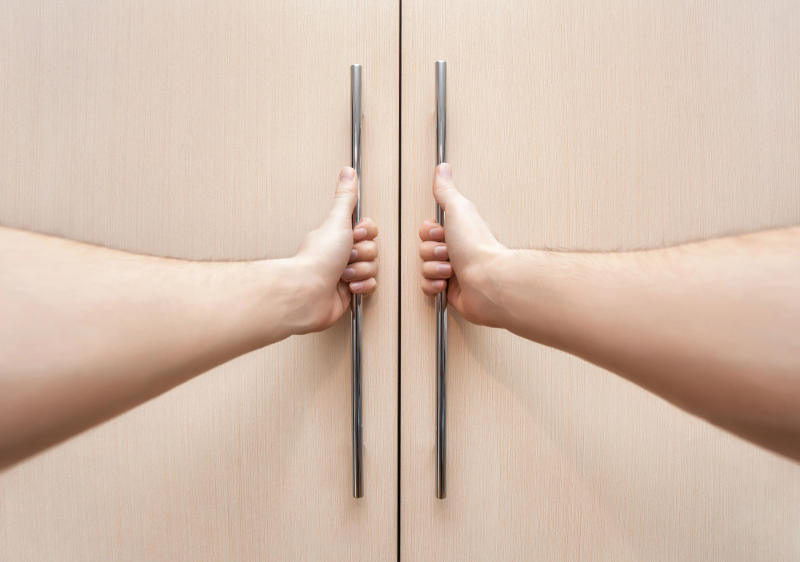
Large knobs, hinges, or pulls will instantly give away your secret. Instead, choose concealed hinges, magnetic push-to-open latches, or finger pulls routed into the door edge. These subtle mechanisms keep the door streamlined and unobtrusive.
→ Bonus: touch-latch doors are great for hands-free access when cooking. - Maintain function:
While the goal is concealment, don’t sacrifice usability. A hidden door should open easily, close securely, and never obstruct foot traffic or adjacent cabinetry.
→ Pocket, pivot, or soft-close mechanisms work well depending on your kitchen layout. Test your door swing path before installation. - Layer lighting:
Strategically placed lighting can draw the eye away from the pantry entrance while highlighting other design elements. Consider under-cabinet LEDs, sconces, or overhead pendant lighting to guide attention toward open shelves or statement pieces.
→ Inside the pantry, add motion-activated lights to boost visibility and enhance the reveal. - Think about framing:
The trim — or lack of it — plays a huge role in concealment. Use flush baseboards, frameless jambs, or even continuous crown molding that runs right over the door to keep the sightline uninterrupted.
→ For a more modern look, skip trim altogether and go with a flush-set slab door for a gallery-wall effect. - Consider glass if you want semi-visibility:
Frosted, ribbed, or reeded glass pantry doors offer a unique middle ground between hidden and open storage. They maintain a light, airy look while subtly obscuring the contents inside.
→ Curious about glass pantry doors? Explore more design ideas here.
Who Should Consider a Concealed Pantry?
A hidden pantry door is a highly functional solution for many types of kitchens and homeowners. Here’s who benefits most from integrating a concealed pantry:
- Small kitchens with limited visual space:
In compact kitchens, open shelving or visible pantry doors can make the space feel busy. A concealed pantry door helps visually declutter the room, allowing the rest of the design to shine. - Minimalist and modern homes:
If your style leans toward clean lines, simplicity, and architectural balance, a hidden door blends right in. It maintains the minimalist flow of your space without compromising storage needs. - Luxury and custom-built kitchens:
High-end kitchens often emphasize integration and seamlessness, where even appliances and storage are hidden. A concealed pantry adds to that sophistication, offering both convenience and design continuity. - Busy families with messy zones:
Let’s face it, not every pantry is Pinterest-ready every day. A hidden pantry door allows you to keep the “lived-in” side of life tucked away, without constant upkeep or styling. - Entertainers and open-concept homes:
If your kitchen is part of an open living area, a concealed pantry can keep the backdrop tidy and consistent while guests are over. It creates a streamlined aesthetic, especially during dinner parties or holidays when presentation matters.
Final Thoughts
A concealed pantry door is a beautiful way to create visual harmony and make your kitchen feel more streamlined and intentional. From sleek modern spaces to cozy farmhouse kitchens, hidden pantry doors can be tailored to suit any style.
And the best part? It’s not just for show. Hidden pantries are fully functional, often easier to organize, and offer the joy of surprising guests with a “secret” room behind a wall or cabinet.
Ready to hide your pantry in plain sight? With the right materials and layout, your pantry can disappear completely — until you need it.