When designing or organizing a pantry, one of the most important decisions you’ll face is choosing between open shelving and closed storage. Both options offer unique benefits — and potential challenges — depending on how you cook, how much you store, and the look you want to achieve.
This guide breaks down the differences between open and closed pantry shelving, including pros, cons, and who each option works best for.
What Is Open Pantry Shelving?
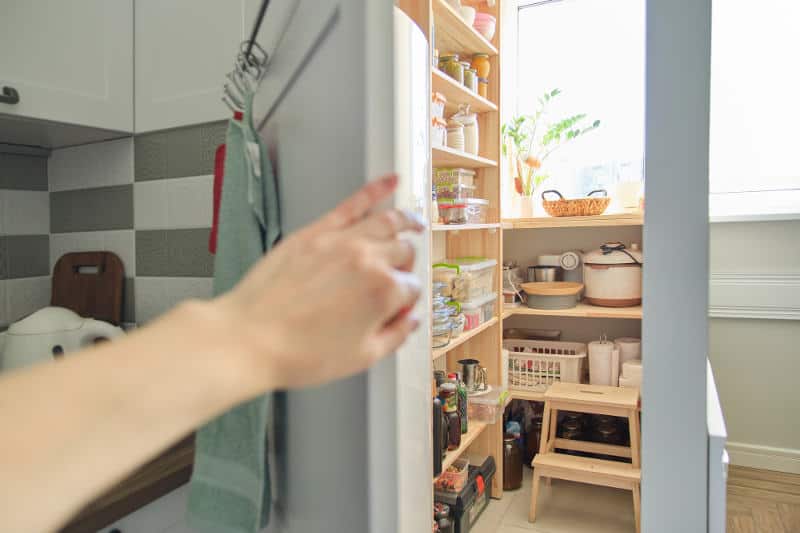
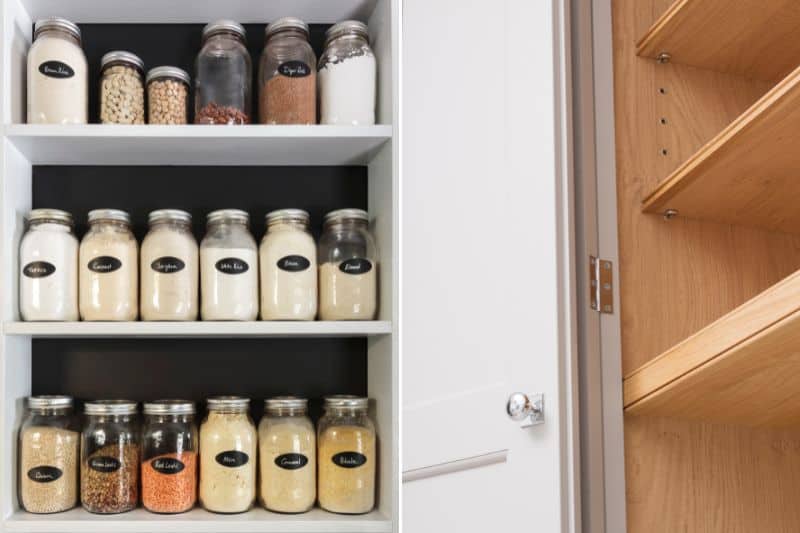
Open pantry shelving refers to exposed shelves that are not enclosed by cabinet doors or drawers. This type of shelving allows the contents — such as jars, cans, baskets, or dishware — to remain fully visible and easily accessible. It’s a style commonly found in modern, farmhouse, Scandinavian, and minimalist kitchens, and it’s increasingly popular for its blend of function and aesthetics.
Unlike closed cabinetry, open shelves promote a sense of openness and simplicity. They can be used in walk-in pantries, reach-ins, or even along a kitchen wall as a visible extension of the cooking zone. The idea is to put your storage on display, turning what’s usually hidden into a design feature.
While open shelving works beautifully for carefully curated items like glass jars, labeled canisters, and matching baskets, it can be less forgiving with clutter or mismatched packaging. That’s why it’s often favored by homeowners who enjoy maintaining a neat and styled appearance.
Pros of Open Shelving
- Easy Access: No doors to open means you can grab what you need in an instant. Open shelving is especially helpful when cooking or baking, as you can move quickly between ingredients.
- Inventory Visibility: With everything in plain sight, it’s easier to keep track of what you have. You’re less likely to forget about items or let food expire, and you’ll avoid overbuying during grocery runs.
- Stylish Display Potential: Open shelves offer an opportunity to express your style. You can create beautiful arrangements of glass jars, wood crates, metal baskets, or ceramic containers, giving your pantry a curated, Instagram-worthy vibe.
- Enhances Light and Space: Open shelving reflects more light and eliminates the visual bulk of cabinet doors, making even small or narrow pantries feel brighter and more spacious.
- Budget-Friendly: Since you’re not paying for doors, hinges, or hardware, open shelving is often more affordable, especially for DIY projects. Floating shelves or basic brackets can be an economical and stylish solution.
Cons of Open Shelving
- Requires Tidy Storage Habits: Because everything is exposed, open shelving works best when you’re committed to maintaining order. Disorganized shelves can quickly look messy or chaotic.
- Prone to Dust and Grease: Items on open shelves are more likely to collect dust or be affected by kitchen grease, especially if the pantry is near the stove or lacks ventilation. Regular cleaning is a must.
- Can Feel Cluttered: Unless you use uniform containers or baskets, open shelving can make the space feel visually busy. Mismatched items or original packaging can interrupt the clean look.
- Limited Concealment: There’s no place to “hide” unattractive or odd-shaped items. Things like chip bags, cleaning supplies, or miscellaneous tools are harder to store discreetly.
Best For
- Visually organized households who enjoy maintaining neat, styled shelves
- Design-focused homeowners who want to turn storage into a statement
- Smaller kitchens or pantries that benefit from a light, open feel
- DIYers and budget-conscious remodelers looking for low-cost, high-impact storage
- Frequent cooks who need fast, easy access to commonly used ingredients and tools
What Is Closed Pantry Shelving?
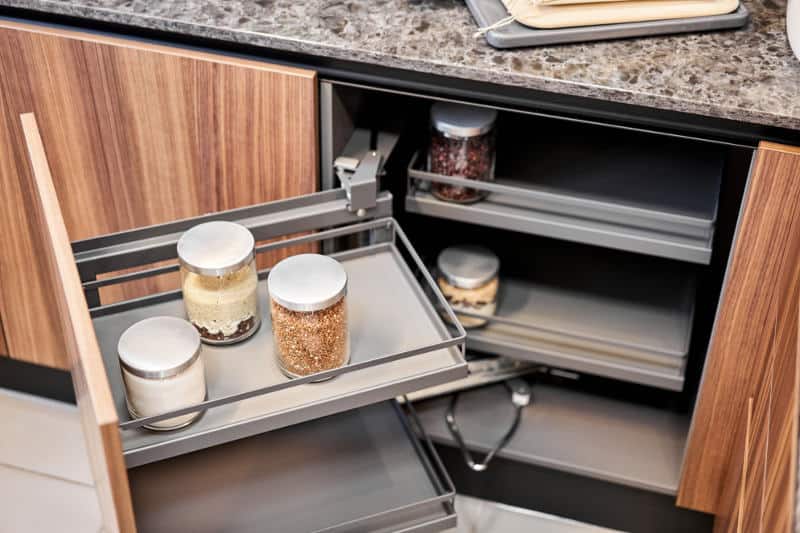
Closed pantry shelving refers to storage hidden behind cabinet doors, drawers, or opaque panels. Rather than putting pantry items on display, this approach conceals everything from view, creating a clean, cohesive look. Closed shelving is commonly found in built-in cabinet pantries, traditional walk-ins, and custom pantry walls.
While open shelving emphasizes accessibility and aesthetics, closed shelving prioritizes discretion, order, and flexibility. It’s ideal for households that value visual simplicity or want to reduce daily upkeep by keeping clutter out of sight.
With doors that close, you gain not just a tidier appearance but also better protection for pantry contents, which is particularly helpful in high-traffic kitchens where dust, grease, or curious kids might otherwise be an issue. If desired, the pantry door itself can also be hidden for an even more streamlined look.
Closed shelving is especially effective in multifunctional pantries, where food items are stored alongside small appliances, extra cookware, or cleaning supplies. It allows you to store more while maintaining a polished look.
Pros of Closed Shelving
- Clutter Control: Closed doors make it easy to hide imperfect packaging, mismatched jars, or bulk items. You don’t have to worry about creating a “display” or sticking to a uniform aesthetic.
- Cleaner, Minimalist Look: Cabinetry with solid doors gives your pantry or kitchen a sleek and cohesive appearance, especially in contemporary or traditional designs. It’s ideal for anyone who prefers calm over visual stimulation.
- Protection from Dust and Grease: Items behind closed doors are less exposed to airborne dust, kitchen steam, or grease. This means you won’t have to clean your shelves (or what’s on them) as often.
- Greater Storage Flexibility: Closed shelving is more forgiving of awkward-shaped items like cereal boxes, oversized bags, or countertop appliances. It’s also easier to experiment with internal organizers without worrying about the visual outcome.
Cons of Closed Shelving
- Reduced Visibility: What’s out of sight can quickly be out of mind. You may forget what you have, let food expire, or buy duplicates unless you stay organized with inventory systems or pull-out bins.
- Slower Access: It takes extra time to open doors or drawers. This is especially inconvenient in a busy kitchen or when you need to check on multiple items while cooking.
- Visually Heavy in Small Spaces: Too many closed cabinets in a tight area can make the room feel boxed-in or dark. It can work, but balancing with light colors or glass fronts helps.
- Higher Cost: Compared to open shelves, closed shelving typically involves more materials and labor — like cabinet frames, doors, hardware, and possibly custom sizing. This can significantly increase renovation costs.
Best For
- Families or busy households that need to store a lot of pantry items without worrying about aesthetics
- Minimalist homeowners who prefer clean lines and visual simplicity
- People with mixed or bulky items they don’t want to keep on display
- Those who want low-maintenance organization that doesn’t rely on perfect labeling or display techniques
- Walk-in pantry users who want to incorporate both food and utility storage without visual clutter
Open vs. Closed: How to Choose What’s Right for You
Still not sure which style suits your kitchen best? Ask yourself these key questions:
Do You Prefer Everything on Display — or Out of Sight?
If you love the look of coordinated containers and want your pantry to feel like an extension of your decor, open shelving offers that styled, magazine-worthy appeal. If you’d rather keep things tucked away and maintain a clean, uninterrupted look, closed shelving is likely the better fit.
How Organized Are You — Really?
Open shelving shines when it’s neat and consistent. It works best for people who don’t mind keeping labels front-facing and containers perfectly lined up. If that sounds exhausting, closed storage may offer peace of mind by hiding the visual mess.
What Kind of Items Do You Need to Store?
Open shelves are ideal for pretty pantry staples like grains, cereals, jars, and snacks when decanted into matching containers. For large or awkwardly shaped items (think rice cookers, chip bags, or bulk buys), closed shelves or cabinets can handle the clutter without compromising the look.
What’s the Size and Shape of Your Pantry?
In smaller kitchens or pantries, open shelving can visually lighten the space and make it feel less cramped. In larger or walk-in pantries, closed shelving may be more practical, especially if you’re storing a wide range of items beyond food, like appliances or cleaning supplies.
What’s Your Budget and Project Scope?
Open shelving is generally more cost-effective, especially if you’re going the DIY route. Closed shelving typically involves cabinetry, hardware, and sometimes custom installation — meaning more time and money.
Can You Combine Both?
Definitely. In fact, many well-designed kitchens and pantries use this strategy. Consider installing open shelves for visually appealing, frequently used items (like grains, teas, or snacks) and using closed cabinets or drawers to hide less attractive essentials, overflow items, or small appliances.
This combination gives you the best of both worlds: functionality where you need it, style where you want it, and a system that works for your real-life kitchen routines.
What About Glass Pantry Doors?
If you’re torn between open and closed shelving, a glass pantry door might offer the perfect in-between. Glass doors maintain the visual lightness and visibility of open shelving while still providing some of the structure and protection of closed storage.
Depending on the type of glass you choose (clear, frosted, ribbed, or textured), you can customize the balance between display and discretion. Clear glass lets you show off your pantry styling, while frosted or opaque finishes offer a softened, semi-hidden look.
Glass doors are especially effective in walk-in pantries or reach-ins with open shelving inside. They let light flow through, keep dust at bay, and add a polished, architectural touch to your kitchen design.
Want to explore more? Check out our full guide to glass pantry doors.
In Conclusion
There’s no universal right answer — only what works best for your home, habits, and preferences. Open shelving adds style and quick access, while closed shelving offers simplicity and concealment.
Choose the one that fits how you live (and cook), or combine both to create a pantry that’s as practical as it is beautiful.
Related: Wire vs. Wood Shelving for Your Pantry: Pros, Cons & Best Choice