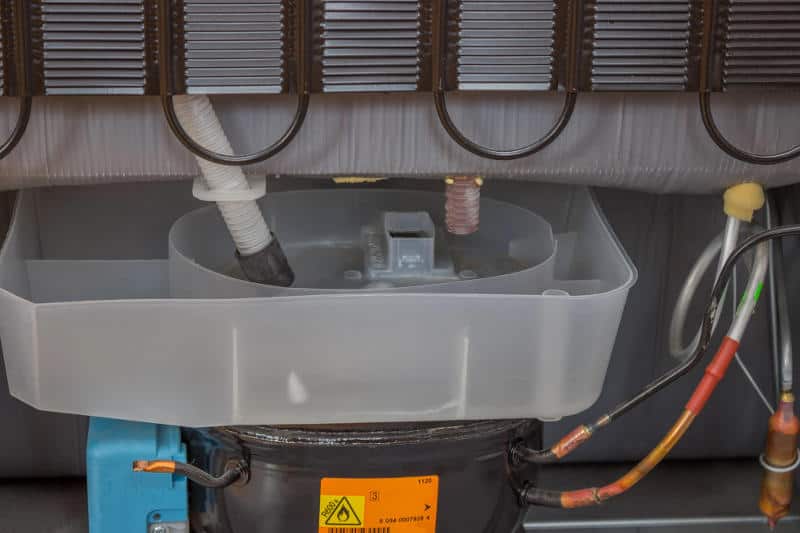
If your refrigerator suddenly stops keeping food cold, one possible cause is a leak in the sealed refrigerant system. Although this is less common than issues like dirty coils or worn door seals, it’s a serious mechanical problem that usually requires professional repair.
This guide explains how a refrigerator’s refrigerant system works, the signs of a possible leak, and what to do if you think your fridge has one.
What the Refrigerant Does
A refrigerator doesn’t create cold air; it removes heat from inside the cabinet and dumps that heat into your kitchen. The refrigerant is the substance that makes this heat transfer possible.
It circulates through a sealed loop of metal tubing and constantly changes between a liquid and a gas. Inside the fridge walls, it evaporates into a gas and, in doing so, pulls heat out of the food and air. That’s what makes the inside feel cold.
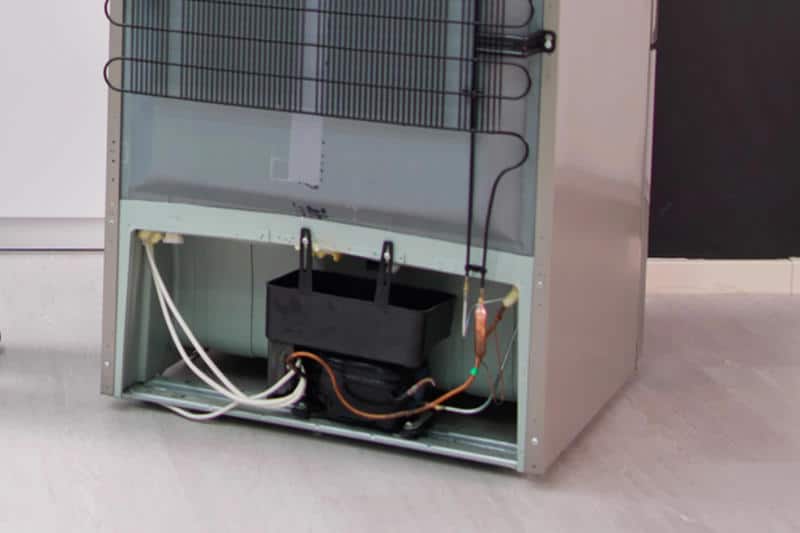
The compressor then pumps this gas to the coils on the back or underneath the fridge, where the heat is released into the room. As the heat leaves, the refrigerant turns back into a liquid and flows around to repeat the cycle again and again.
Because this loop is completely sealed at the factory, the refrigerant is never supposed to be “used up.” Unlike fuel, it isn’t consumed. If the level drops, it means some has escaped through a leak, and the system can no longer move heat effectively.
Do Modern Fridges Use “Freon”?
“Freon” is a brand name that became a catch-all term for older refrigerants. Most modern household refrigerators actually use newer refrigerants such as R-134a or R-600a (isobutane).
These newer refrigerants are used in very small amounts, relatively low in toxicity, and unlikely to cause serious harm in a normal, ventilated kitchen even if a leak happens.
However, even a small leak matters for performance. With less refrigerant circulating, the system can’t absorb and release heat properly, so the fridge struggles to stay cold.
Common Signs of a Possible Refrigerant Leak
Refrigerant leaks usually show up as weak or uneven cooling rather than strong smells. Typical warning signs include:
- Both the fridge and freezer feel warmer than their settings.
- The compressor at the back or bottom runs almost all the time instead of cycling on and off.
- Food spoils faster than usual despite the fridge being “on.”
- The fridge takes a very long time to cool down and never quite reaches its normal cold temperature.
- Frost forms only on one part of the freezer’s internal coil instead of evenly across it (something a technician checks behind the inner panel).
- A greasy or oily film appears on tubing or the floor near the compressor area.
These symptoms are usually constant rather than occasional. If the fridge is always a bit too warm and the compressor rarely gets a break, that points more toward a possible refrigerant loss.
Because the compressor is working nearly nonstop trying to reach the target temperature, you may also notice your electricity bills creeping higher than usual.
What a Refrigerant Leak Does Not Usually Cause
A refrigerant leak usually doesn’t create obvious messes or strong odors. For example:
- If you see water on the floor, the cause is more often a blocked defrost drain or condensation issue, not leaking refrigerant.
- If you notice musty or rotten smells, that’s almost always spoiled food or mold inside the cabinet.
- Rattling or knocking noises from shelves or doors are mechanical or alignment issues, not related to the sealed cooling system.
- A thick, even blanket of frost covering the entire freezer interior is typically a defrost system problem, not a refrigerant leak.
Because refrigerant itself is typically odorless and invisible, you generally can’t rely on smell or visible vapor to detect a leak. Changes in how well the fridge cools are a much more reliable clue than any scent or puddle.
Is It Dangerous?
For a normal household refrigerator in a typical kitchen, the danger is low.
These appliances contain only a small amount of refrigerant, and if it escapes into a well-ventilated room it quickly mixes with the air and disperses. Severe poisoning from a domestic fridge leak is extremely rare.
The main practical risks are irritation from concentrated fumes right next to the leak and, in some newer fridges that use flammable refrigerant, a small fire risk if the gas were to build up in a very confined, unventilated space and meet a spark. In an open kitchen with normal airflow, this scenario is unlikely.
Basic precautions are still sensible:
- open a window to increase airflow,
- don’t deliberately inhale any escaping gas near the back of the fridge,
- unplug the appliance before closely inspecting around the compressor or tubing.
- avoid using open flames or creating sparks right next to a suspected leak.
If anyone feels lightheaded or unwell, move them to fresh air and get medical advice, but serious health effects are unlikely in normal home conditions.
What Causes Leaks?
The refrigerant travels through strong, sealed metal tubing, so leaks aren’t common and don’t happen from everyday use.
When leaks do occur, they’re usually due to:
- long-term corrosion of the tubing,
- a small defect from manufacturing that worsens over time,
- accidentally puncturing a hidden coil while chipping away ice with a sharp tool,
- or damage from dropping or roughly transporting the fridge.
Normal actions like closing the door firmly won’t rupture the sealed lines. Most leaks come from physical damage or many years of wear rather than routine opening and closing of the appliance.
Can You Fix It Yourself?
In most situations, a refrigerant leak is not a DIY repair.
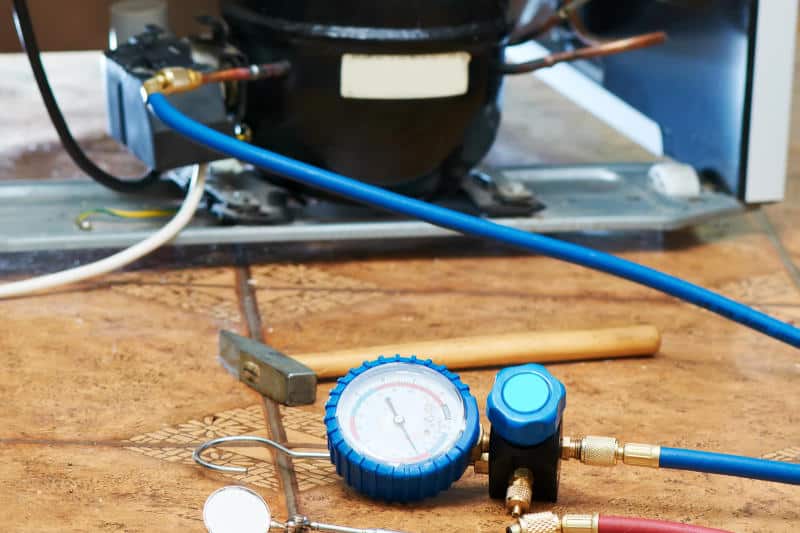
Fixing it properly isn’t just about adding more refrigerant. The leak has to be found and permanently sealed, the entire system must be vacuumed to remove air and moisture, and then it has to be refilled with the exact type and measured amount of refrigerant the manufacturer specifies.
Doing this requires specialized tools and skills, and in many places only certified technicians are legally allowed to handle refrigerants. Quick fixes like sealants, epoxies, or recharge cans often fail, and they can contaminate the system or create safety and fire risks in some modern fridges.
What You Should Do If You Suspect a Leak
Start with simple checks, since many cooling problems aren’t leaks at all:
- Make sure the temperature setting hasn’t been turned up.
- Check that the door gaskets are clean and sealing all the way around.
- If you can access them, gently clean dust and lint from the outside condenser coils to improve airflow.
If the fridge still isn’t getting cold and the compressor seems to run almost nonstop:
- Unplug the refrigerator.
- Open a window or door to increase ventilation.
- Avoid touching, bending, or puncturing any metal tubing at the back or underneath.
- Don’t try to add refrigerant or apply sealants yourself.
Then contact a qualified appliance or refrigeration technician and ask for a “sealed system” check. They can properly test for leaks and also rule out more common, less expensive problems like faulty fans, sensors, relays, or thermostats before recommending a major repair.
Repair or Replace?
Repairs to the sealed refrigerant system are among the most costly fridge repairs because they are labor-intensive and require special equipment.
In many areas, a sealed-system repair typically falls in the range of about $500 to $1,200 USD, depending on what has failed (for example, a small tubing repair at the lower end, or a compressor and evaporator replacement at the higher end).
As a rough guide:
- A relatively new or high-end refrigerator is often worth repairing, especially if replacement would cost $1,500–$3,000 or more.
- An older, basic model that originally cost a few hundred dollars is often cheaper to replace than to fix.
Getting a professional diagnosis and written quote lets you compare the actual repair price to the cost of a new appliance and make a sensible decision.
If you decide to get rid of it, check out our article on this topic for some safe and responsible ways to do so.
How to Reduce the Risk in the Future
Refrigerant leaks are rare, but a few habits can make them even less likely.
- Never scrape or chip ice with knives, screwdrivers, or other sharp tools. Hidden cooling lines can sit just behind the freezer wall, and one slip can puncture them.
- When moving the fridge, keep it upright and avoid dropping or laying it on its side unless the manufacturer specifically says it’s safe. Rough handling can stress or crack the sealed tubing.
- Vacuum or brush dust off the external coils once or twice a year. Clean coils help the system run cooler and reduce long-term wear and corrosion on the metal lines.
These simple steps won’t prevent every failure, but they lower the chances of accidental damage and overheating.
In Conclusion
A refrigerant leak is not a routine maintenance issue and it isn’t something that needs periodic refilling. It’s a sign of a failure in the sealed cooling system.
While it’s rarely an immediate health emergency in a home kitchen, it does mean the refrigerator won’t function correctly and needs professional attention. If you suspect a leak, ventilate the area, unplug the unit, and have a qualified technician inspect it before deciding whether to repair or replace the appliance.