Living in a rental often means working with limited space and strict rules: no drilling into walls, no built-ins, no major changes. But a smaller, temporary home doesn’t have to feel cramped or cluttered.
The secret to great storage isn’t more square footage. It’s using the space you already have in smarter, more flexible ways. With the right setup, even a compact apartment can feel open, organized, and easy to live in.
Here are practical, renter-friendly storage ideas that make the most of every inch while keeping your walls intact and your security deposit safe.
1. Think Vertical, Not Just Horizontal
When you can’t spread out, build up. Most rentals have plenty of unused wall height, but low, wide furniture leaves that space untapped. Tall, narrow storage pieces make use of the full height of the room without any drilling or permanent installation.
Vertical storage also helps a small room feel bigger. By drawing the eye upward, you highlight the ceiling height and reduce the crowded look that happens when everything sits at waist level.
A few smart ways to organize vertically:
- Place heavier, rarely used items (extra blankets, luggage, archive boxes) on the top shelves.
- Keep everyday items between hip and eye level for easy reach.
- Use matching bins or baskets up high to conceal visual clutter while keeping contents accessible.
If stability is a concern, position taller units in a corner or snugly between two walls so they feel built-in, even though they’re completely freestanding.
If you have pets or small children, consider using removable anti-tip straps for extra safety on very tall units, especially in high-traffic areas.
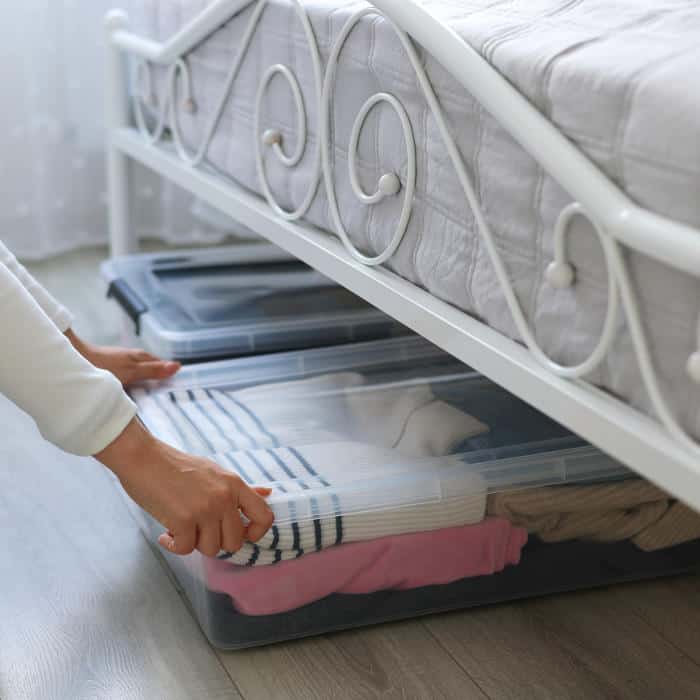
2. Use Under-Bed Storage Like a Pro
The space under your bed is one of the largest uninterrupted storage areas in most homes, yet it’s often ignored. Think of it as a shallow, extra-wide closet that can handle bulky or overflow items.
The secret is easy access. If pulling things out feels like a chore, you’ll stop using the space effectively. Try to store items you use weekly near the edge and long-term storage toward the center, so you’re not dragging everything out to reach one thing.
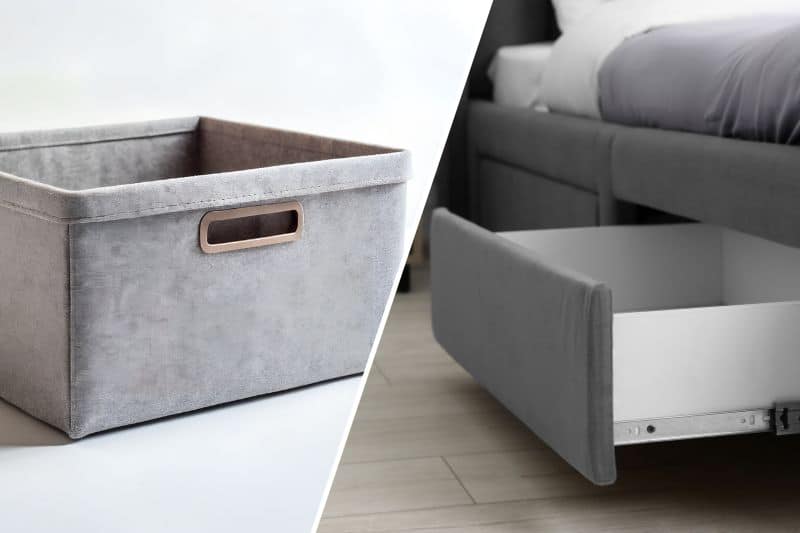
- Rolling drawers work best for frequently used items like shoes or gym clothes.
- Flat, lidded bins keep dust off spare linens, underwear, and out-of-season clothing.
- Vacuum-sealed bags are ideal for bulky coats, blankets, or duvets you only need part of the year.
If your bed frame sits low, simple risers can add several inches of clearance, instantly creating more usable storage height. For a neat, intentional look, choose containers that match in size and color so the area feels organized rather than crammed.
3. Maximize Closets With Add-Ons
Most rental closets leave a big gap of unused air between the top shelf and the floor. With a few removable add-ons, you can almost double your usable space without changing the closet itself.
The biggest upgrade is adding a second hanging level. Shorter items like shirts and folded pants don’t need full-length clearance, so installing an extra rod below the main one instantly multiplies hanging capacity.
Organize the closet in layers:
- Top shelf: labeled bins for rarely used or seasonal items
- Upper hanging rod: shirts, jackets, skirts
- Lower hanging rod or hanging shelves: pants, knits, and bags
Don’t overlook the door. An over-the-door organizer turns that blank surface into vertical storage for shoes, scarves, accessories, or even cleaning supplies, while keeping the closet floor clear and easy to clean.
Because these pieces are freestanding or tension-mounted, you can remove them in minutes and reuse the entire setup in your next home.
For even more ideas, see our guide to smart closet storage solutions.
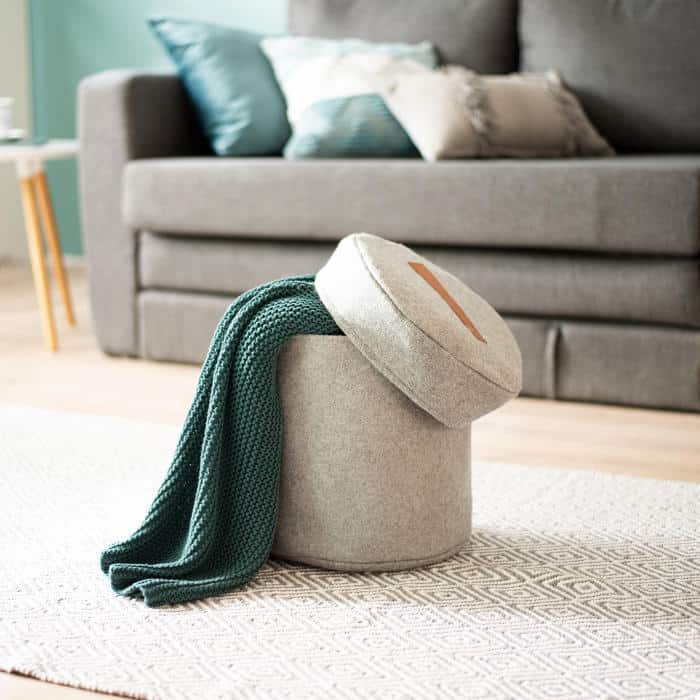
4. Choose Furniture That Stores Things
In a rental, you usually can’t add built-in cabinets, so your furniture needs to work harder. Pieces with hidden storage keep everyday essentials nearby without making the room look crowded.
Start thinking of furniture as containers, not just surfaces:
- An ottoman can hold blankets, board games, or tech accessories while doubling as extra seating.
- A bed with built-in drawers can replace a bulky dresser for folded clothes.
- A lift-top coffee table hides remotes, chargers, and paperwork and can rise to become a desk or dining spot.
- An entryway bench conceals shoes and creates a tidy landing place for bags and keys.
By building storage into the furniture you already need, you avoid adding extra shelves or plastic bins around the room. The result is less visible clutter and a space that feels lighter and more open.
5. Use Doors and Walls (Without Damage)
Walls and doors are some of the biggest unused surfaces. The key is using them in ways that are strong, useful, and completely reversible.
Removable adhesive hooks and strips can hold more than you might expect, from jackets and backpacks to headphones and kitchen tools. Placed where you naturally reach for things — by the entry door, beside the bed, above a desk — they create small, convenient drop zones that keep clutter off other surfaces.
Over-the-door racks add instant vertical storage without touching the walls or floor. Use them for:
- Towels in a tight bathroom
- Pantry items behind a kitchen or utility door
- Shoes, scarves, or accessories on a closet door
Leaning or freestanding pegboards offer even more flexibility. Because they sit on the floor and rest against the wall, there’s no drilling required, and you can rearrange hooks and shelves whenever your needs change.
For best results, match the storage to the spot: hang items exactly where you use them, so putting things away becomes effortless.
6. Divide and Conquer Drawers and Cabinets
A large, empty drawer feels generous at first, but without structure it quickly turns into a cluttered catch-all. Breaking that space into smaller sections actually lets you store more, because every item has a defined place.
Adjustable dividers make it easy to customize compartments for whatever you’re storing, from chunky kitchen tools to slim makeup brushes. In deeper cabinets, small bins work like pull-out drawers: instead of digging around in the back, you slide the whole category forward at once.
Shelf risers are a simple but powerful upgrade, especially in kitchens. Rather than stacking plates or mugs into one unstable tower, you create two shorter, easy-to-see levels. That keeps items accessible and prevents the domino effect when you remove one piece.
When each type of item has clear boundaries, it’s easier to stay organized and harder to overstuff any single drawer or shelf.
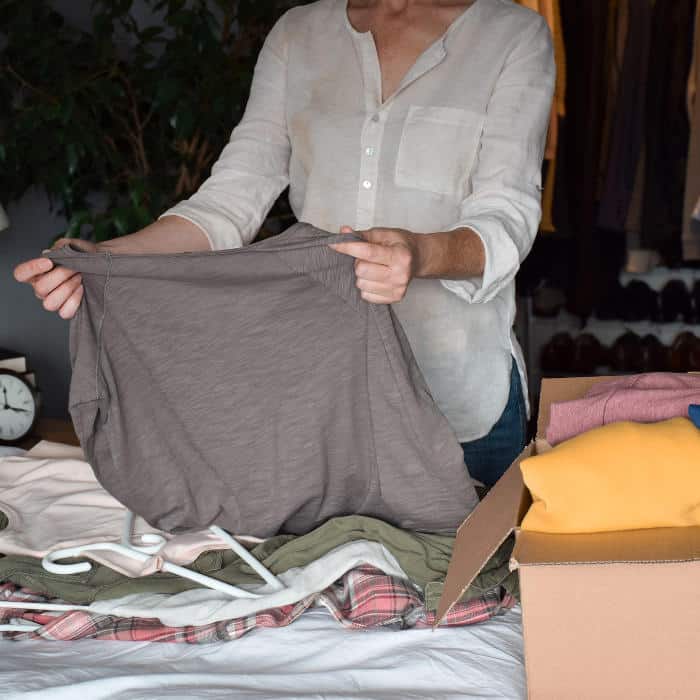
7. Rotate and Edit Seasonally
Storage works best when it matches what you actually use right now. Keeping every season within arm’s reach clutters your most valuable, easy-access spots.
Think of your home like a boutique that updates its displays. As the weather changes:
- Move off-season clothes to under-bed bins or high shelves
- Bring current-season items to the front of the closet and top drawers
This simple rotation frees up prime space without buying a single new organizer. Setting a calendar reminder at the start of each season makes this habit automatic instead of easy to forget.
Seasonal swaps are also the perfect time to edit. If you didn’t wear or use something during its proper season, it’s probably safe to donate or sell. Doing this regularly stops slow, invisible buildup before it takes over your closets.
With fewer items in active circulation, cleaning is quicker, getting dressed is easier, and your closet doors close without a fight.
And remember, seasonal change isn’t the only good moment to declutter. See our guide to the key signs it’s time to clean out your closet for more timely reset points throughout the year.
8. Create Zones in Multipurpose Rooms
When one room has to handle several roles, smart storage should separate those roles. Instead of letting everything blend together, give each activity its own self-contained kit.
For example:
- A dedicated basket for work essentials (laptop stand, notebook, charger) that tucks under the table when you clock out
- A rolling cart for crafts or hobbies that lives in a closet and rolls out only when needed
- Clearly labeled bins for categories like “office,” “gaming,” or “DIY” on a shared shelf
These portable zones let a single surface switch functions throughout the day. Your dining table can be a desk at noon and ready for dinner at six because the entire “office” packs away in one grab-and-go container.
Zoning also cuts visual clutter. Even in a one-room space, each activity has clear boundaries, so tools and supplies don’t slowly spread across every surface.
9. Use the Backs and Sides of Furniture
We usually think of furniture from the front, but the backs and sides can be valuable, low-visibility storage spots.
A slim console table behind the sofa works like a hidden shelf. Baskets underneath can hold blankets, chargers, or toys, while the top supports a lamp or plants. From the main seating area everything looks neat, but everyday essentials are right behind you.
In the kitchen, the exposed side of a cabinet is perfect for a few removable hooks. Hanging oven mitts, measuring cups, or small utensils here frees up packed drawers without adding clutter to the counter.
Those narrow gaps beside appliances or wardrobes are also useful. A skinny rolling cart can slide into these spaces to store spices, canned goods, cleaning supplies, or folded towels, then pull out easily when you need them.
Using these overlooked surfaces keeps frequently used items within reach while protecting your main worktops and tabletops from visual overload.
10. Turn Awkward Corners Into Storage
Corners often end up as wasted space because standard rectangular furniture can’t use them well. Adding pieces designed specifically for corners turns those forgotten angles into surprisingly efficient storage.
A tall corner shelf can hold books, décor, or pantry items without intruding on walkways. In a bedroom or living area, a compact corner desk creates a practical workspace where a full-size desk would feel oversized.
In bathrooms, stacked corner baskets or tiered stands provide extra room for towels and toiletries when there’s no space for another cabinet.
Using corners this way distributes storage more evenly around the room instead of crowding a single wall, helping small spaces feel lighter and easier to move through.
Leave at least a small walking buffer so corner storage adds function without making the room feel cramped.
11. Add Storage Inside Cabinet Doors
Cabinet doors may be slim, but they’re incredibly useful storage surfaces. Because the door closes, anything mounted there stays out of sight and keeps counters and shelves looking clean.
Shallow racks on kitchen cabinet doors are great for spices, foil, or small boxes that would otherwise crowd a drawer. Under the sink, a door-mounted caddy keeps cleaning sprays upright and within reach instead of getting lost in the back of the cabinet.
In bathrooms, heat-safe holders can neatly store hair dryers or straighteners, clearing valuable counter space and reducing cord clutter.
Just be sure to choose lightweight, low-profile organizers so the door can still close easily. Adhesive-mounted or over-the-door options keep everything renter-friendly and fully removable when it’s time to move.
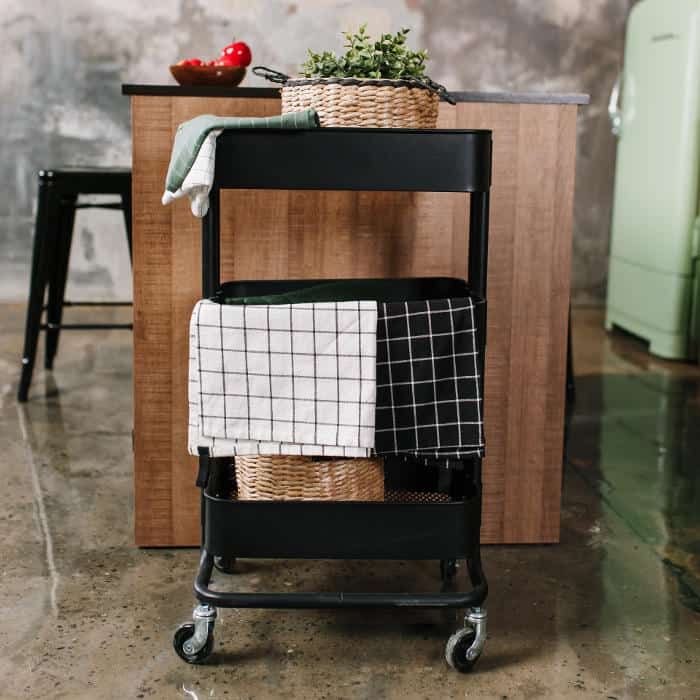
12. Go Mobile With Rolling Storage
Anything on wheels becomes flexible storage instead of fixed furniture. That flexibility is especially valuable in rentals, where one room often has to serve multiple purposes.
A rolling cart can tuck into a narrow gap most of the time, then roll out to act as a prep station, bar cart, bedside table, or hobby hub. When you need more open floor space, just wheel it into a closet or against a wall.
Mobility also means your storage can follow your activities. Cooking tools can move from the kitchen to the dining table, and craft supplies can travel from a closet to the coffee table and back when you’re done.
Because nothing is anchored in place, you can rearrange your setup anytime without tools, holes, or damage — letting your storage adapt as your routines change.
13. Use Clear and Labeled Containers
Hidden storage can easily become forgotten storage. Clear containers solve that problem by letting you see your inventory at a glance.
In the kitchen, transparent bins in the pantry or fridge group similar foods together, so nothing gets lost behind something else. You waste less food and avoid buying duplicates because you can instantly tell what you have.
For higher shelves where visibility is worse, matching boxes with bold, simple labels work best. Even if you can’t see inside, you know exactly where “winter scarves” or “extra toiletries” live, so you’re not pulling everything down to find one item.
Paper clutter benefits from the same idea. Clear vertical file holders keep mail, documents, and magazines sorted but visible, turning random stacks into a tidy, browsable system.
The visual consistency of matching containers also makes a small space feel intentional and calm rather than busy and chaotic. Even inexpensive bins look more polished when you stick to one color or material per area.
14. Think Foldable and Collapsible
In small spaces, the most useful storage solutions are often the ones that disappear when you’re done with them.
Foldable furniture gives you full-size function only when you need it. Extra dining chairs can hang flat on closet hooks instead of living on the floor year-round. A drop-leaf or folding desk can open up for work or meals, then fold down to free up walking space.
Even everyday essentials like laundry baskets, crates, and bins come in collapsible versions that tuck into a slim gap beside a washer or wardrobe when empty.
This approach keeps your home from filling up with “just in case” pieces. You borrow space for the moment you need it, then give that space back to the room.
15. Light It Up
Bad lighting turns perfectly usable storage into a black hole. If you can’t see what’s in the back or up high, you’ll avoid those spots and pile everything into the easiest-to-reach areas.
Simple, renter-friendly lighting can fix this in minutes. Stick-on or magnetic LED lights brighten closets and shelves without any wiring. Motion-sensor lights inside cabinets switch on as soon as you open the door, making deep corners just as practical as the front edge.
Placing a small lamp on a dark bookcase or in a storage nook not only improves visibility but also visually connects that area to the rest of the room.
When every shelf is well-lit, you naturally spread items out instead of stacking them, which increases usable capacity and keeps your main surfaces clutter-free.
Final Thoughts
Great renter storage is all about flexibility. Choose solutions that are removable, modular, and multipurpose. That way your systems adapt to new layouts and new homes, saving you money and effort every time you move.
With a handful of thoughtful upgrades, even a compact rental can feel airy, efficient, and completely personalized — proof that smart organization beats square footage every time.