Steam mops have become increasingly popular over the years thanks to their convenience and ease of use. They simplify cleaning compared to more traditional methods. But you might be wondering — can you enhance your steam mop’s performance by using cleaning solutions other than water?
It’s best to stick with what the manufacturer recommends in the user manual. Using anything other than water (or an approved solution) can clog the internal mechanisms and reduce the effectiveness of your steam mop.
Let’s take a closer look at why this matters.
How Do Steam Mops Work?
To understand why most cleaning solutions aren’t recommended for steam mops, it helps to first understand how they work.
Steam mops operate by heating water to just above its boiling point — around 248°F (120°C) — to produce steam that’s emitted onto the surface you’re cleaning. A specialized mop pad then distributes the steam, loosens dirt, and helps eliminate bacteria.
Unlike traditional mops, which can accumulate dirt and bacteria in the mop head and solution, steam mops offer a cleaner, more efficient method. The combination of hot steam and simple swiping motions is usually enough to remove grime and sanitize surfaces, making plain water all you really need.
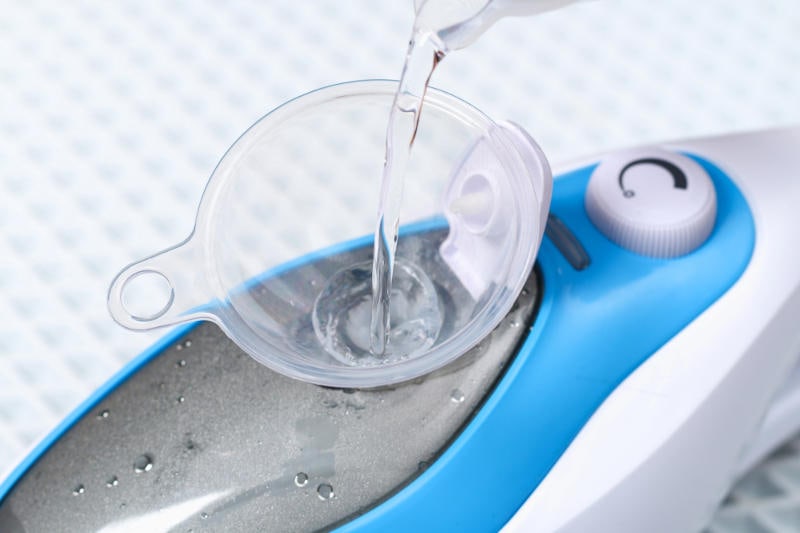
Safe Cleaning Solution You Can Use in Steam Mops
Below are some alternative solutions you can use in your steam mop. However, keep in mind that anything beyond plain water typically requires some modifications or extra precautions to avoid damage.
Water: The Universal Solution
For good reasons, all steam mop manufacturers recommend using water for their models, specifically distilled water. Water is the purest solvent you can use for cleaning. It’s easy on your steam mop’s internal mechanisms and free from harmful chemicals that may strip them of their protective layers.
However, while tap water is already relatively pure, I suggest using distilled water to avoid mineral and chemical buildup in the long run. Your tap’s pipelines can introduce calcium deposits to the water supply and, in turn, into your steam mop.
You can also use demineralized water for this purpose. Demineralized water has virtually no mineral deposits. However, it’s somewhat less pure than distilled water since the latter is more suitable for human consumption. Besides, there might still be traces of minerals left in demineralized water.
To keep your mind at ease, you can easily make your own distilled water at home using water distillers. Below are my recommendations for home water distillers from Amazon.com:
JOMWECL 1.1 Gallon Water Distiller Machine
This water distiller machine from JOMWECL can give you four liters (1.01 gallons) of distilled water per distilling session.
Typically, it takes the machine one hour to distill a liter of water. This should be plenty for regular home cleaning, considering that the average steam mop’s tank usually contains 400 mL (13.5 oz) of water.
The machine is made of food-grade 304 stainless steel, ensuring your water’s cleanliness even more. It’s also certified by three international certification facilities, namely FCC, CE, and RoHS, which says a lot about the product’s quality control.
CO-Z 1 Gallon Water Distiller
The CO-Z water distiller is another machine worth trying. It also comes with a food-safe 304 stainless steel body and a 100% BPA-free plastic chamber for the distilled water. The distiller uses activated charcoal filters to remove volatile organic compounds further.
This product already comes with cleaning powder, which ensures your distiller’s maximum effectiveness even after multiple cleaning sessions. It also sports an automatic power-off system that turns the machine off upon reaching 320°F (160°C).
Finally, the water distiller comes with a 1-year warranty and 24/7 customer support for additional peace of mind.
VEVOR Pure Water Distiller
This water distiller might just be what you need for your steam mop’s longevity. Like the others, it’s made from food-grade stainless steel and BPA-free plastic materials for safer water output.
The water distiller has an automatic power shut-off system which turns the machine off when the temperature reaches 239°F (115°C) to avoid overheating. Its fans are also made of aluminum metal for better heat dissipation — compared to stainless steel.
Yes to Essential Oils — But Not in Your Tank
Technically, you shouldn’t put any oil-based solution in your steam mop’s water tank. Not only will you void your warranty, but you’ll also risk clogging or damaging your mop’s internal parts.
However, you can add some drops of essential oil to your steam mop’s pad. This way, the oil won’t clog up your mop’s internal parts, and you will have nice-smelling floors.
A word of caution, though; oil-infused mop pads can be more challenging to wash since oil-based solutions are hydrophobic. This means they can be resistant to cleaning without using stronger soap or detergents.
You can watch this DIY tutorial to learn how to make a floor cleaning solution with essential oils:
If you’re keen on going this route, I recommend these essential oils from Amazon:
Wtrcsv Essential Oils Set
Consider buying this essential oils set from Wtrcsv if you want to experience different aromas each time you clean your floors or carpets.
With 30 5 mL (0.17 oz) bottles of different essential oils, it’s sure to remind you of summer fields with lavender oil or freshly trimmed gardens with pine needles oil.
Radha Beauty Top 8 Essential Oils
If you want to try different aromas but don’t want the variations offered by the above set, try this 8-piece essential oil set from Radha Beauty Store.
It consists of eight 10 mL (0.34 oz) 100% therapeutic grade essential oils. This means it doesn’t contain potential allergens such as additives, synthetic dyes, or artificial fragrances typically used by cheaper options.
Ola Prima Oils
If you already have a specific aroma of choice, choose one of these 16 oz (0.54 oz) options from Ola Prima Oils.
They come in 14 variations, each made from premium quality and therapeutic grade essential oils. Moreover, they have a solid customer service policy that allows you to refund or replace products that don’t satisfy you.
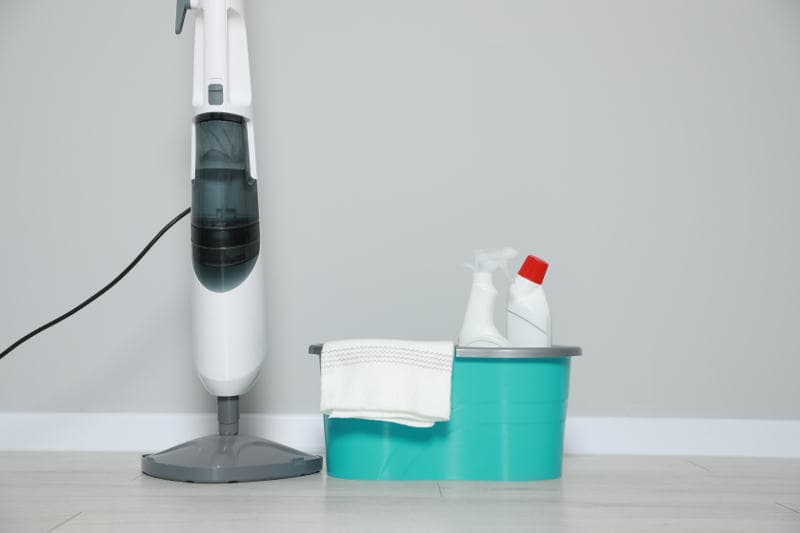
What Cleaning Solutions You Shouldn’t Use in Steam Mops
Now that you know which cleaning solutions you can use in your steam mop, let’s discuss those you shouldn’t. Through scientific evidence, I’ll also lay down several reasons to refute claims that using some of these solutions is perfectly fine for steam mops.
Hydrogen Peroxide
While hydrogen peroxide is an excellent disinfectant, you shouldn’t use it on your steam mop, especially by mixing it with water for your mop’s tank.
High temperatures and hydrogen peroxide can corrode 304 stainless steel used in food applications. Note that food-grade stainless steel usually has a higher corrosion resistance due to concerns regarding food safety.
If we compare this with metal parts found in your average steam mop, you’ll notice that the concern is less about corrosion resistance and more about the material’s strength and durability.
So, if 304 steel offers higher corrosion resistance, yet hydrogen peroxide can corrode it, it’s even more likely to corrode your steam mop’s metal parts.
I would also advise against using a diluted hydrogen peroxide solution on your mop pad since it can still enter your mop’s internal parts through the screws or as steam.
Vinegar
Vinegar is an even harsher solution than hydrogen peroxide. Therefore, you should avoid using it in your steam mop. It has an average pH of 2.5, which means it’s mildly acidic.
However, don’t let this low acidity deceive you since you’ll be pairing this with high temperatures, thereby turning it to steam. This significantly heightens its corrosive properties, affecting rubber o-rings, metal parts, and electric components.
Moreover, vinegar can corrode wooden floors or stain upholstery under high temperatures and regular exposure, making it not an ideal cleaning solution for carpets.
Alcohol
Rubbing alcohol, like hydrogen peroxide, is known for its excellent cleaning properties. However, I would advise against using this solution on your steam mop.
While studies have shown alcohol to be less corrosive to metal than other solutions, manufacturers still caution their users against using. This is because it can damage your steam mop’s mechanisms, particularly the plastic parts, over time.
Moreover, alcohol is also known to leave stains or discoloration on your wooden floors and carpet. It’s also flammable, which poses a hazard when used with a machine built to heat up, like a steam mop.
Household Cleaning Solutions
Household cleaning solutions such as bleach or muriatic acid are some of the worst solutions you can put in your steam mop’s water tank. All other solutions in this list are mild compared to these. You should only use these potent household solutions for heavy cleaning.
Moreover, bleach releases dangerous chlorine gas when it is boiled or mixed with vinegar. The former is especially notable since this happens when you steam your steam mop solution. To give you a better idea of the danger posed by chlorine gas, soldiers used it as a weapon during World War I.
Like bleach, muriatic acid (also known as hydrochloric acid) releases toxic fumes known as hydrogen chloride gas when boiled. According to the Agency for Toxic Substances and Disease Registry (ATSDR), inhaling this gas can cause eye, respiratory, and skin irritation.
Soap or Laundry Detergent
Soap and laundry detergent are staples in household cleaning. They’re so versatile that you might think nothing of putting them on your steam mop. However, I’d also advise against doing this.
News 19 details how several homeowners tried boiling detergent to make their homes smell good, a process akin to putting laundry detergent into your steam mop. The company interviewed Jim Michels of the Palmetto Poison Center, who affirmed that boiling detergent releases chemicals that aren’t meant to be inhaled.
Moreover, soaps and detergents do not fully dissolve in water, so deposits could clog your steam mop’s internal parts.
A study also found alkaline detergents to be corrosive on various metals and alloys. This means using soap and detergent on your steam mop could compromise its internal and external metal parts.
Floor Cleaner
Floor cleaners are designed to clean wooden or tiled floors, so wouldn’t it make sense if you could use them to clean your floor with a steam mop? Apparently not, since floor cleaners are almost made of the same chemicals used in soaps and detergents, which we’ve seen to be unsuitable for use with your steam mop.
Also, floor cleaners use more potent chemicals than laundry detergent or body soap because they’re used on heavy-duty materials such as wood and stone. This makes floor cleaners potentially more dangerous when boiled and more corrosive on your mop’s internal parts.
You might also think you could use floor cleaners on your mop pad instead of directly putting them on the water tank. However, I would still advise against this since steam mops use high temperatures to clean and could force burnt floor cleaner particles inside your steam mop’s exhaust holes.
Moreover, floor cleaners are meant to be used independently or in dilute form. Heating your floor cleaner to boiling temperature could damage or leave stains on your floor or carpet.
Final Thoughts
Steam mops are ingenious inventions that make house cleaning more effective and efficient. You can quickly clean your floor or carpet without buying pricey commercial cleaning solutions or spending time making your own.
However, suppose you think your steam mop can’t handle your cleaning necessities. In that case, I suggest choosing other cleaning tools instead of experimenting with different cleaning solutions that may harm your mop and void its warranty.
Lastly, for better cleaning results, prepare your floor or carpet before using your steam mop to remove dirt more easily.