Choosing the right pantry design might seem like a small detail, but it can have a big impact on how your kitchen functions and feels day to day. From maximizing storage space to creating a more efficient cooking workflow, the type of pantry you choose matters more than you might think.
In this guide, we’ll compare the three most popular pantry styles — walk-in, reach-in, and cabinet pantries — breaking down their benefits, drawbacks, and ideal users to help you find the best fit for your home and lifestyle. Let’s dive in.
Walk-In Pantry
What Is a Walk-In Pantry
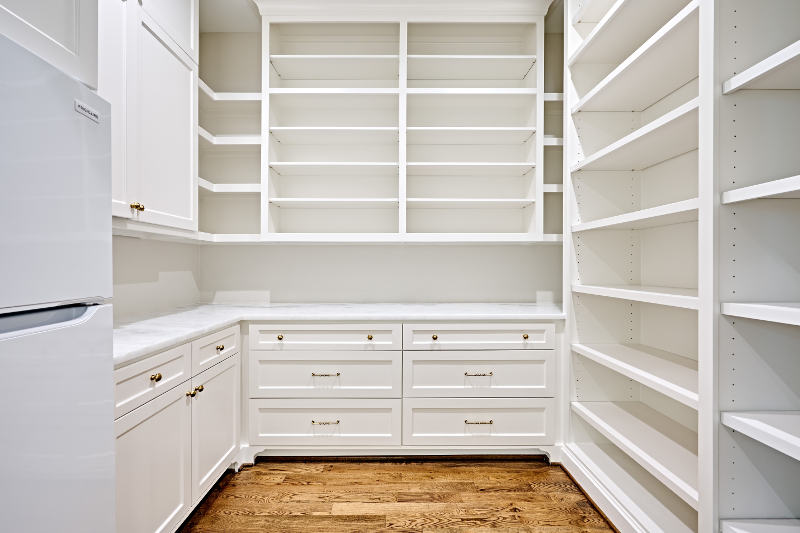
A walk-in pantry is a dedicated, closet-sized or room-sized storage space connected to or located near the kitchen. Think of it as your kitchen’s behind-the-scenes storage headquarters.
Unlike standard kitchen cabinets or small pantry closets, a walk-in pantry provides enough room to step inside, giving you a full view of your shelves, supplies, and storage systems.
Walk-in pantries typically feature wall-to-wall shelving, drawers, and cubbies to hold everything from dry goods to kitchen appliances, oversized cookware, and even cleaning supplies.
In larger designs, some even include countertops for food prep, extra fridge or freezer units, or coffee stations. Some people even turn it into a temporary home office. It’s an incredibly flexible space that can be adapted to suit your lifestyle.
Pros of Walk-In Pantries
Maximum Storage Space
A walk-in pantry offers unmatched capacity. You can store bulk groceries, backup supplies, seasonal items, and larger appliances that don’t fit in kitchen cabinets — freeing up space elsewhere in your kitchen.
Easy Organization
With multiple shelves, zones, and customizable compartments, it’s easier to stay organized. You can create dedicated areas for baking supplies, snacks, canned goods, or even wine and cookbooks. Everything is visible and accessible, reducing the likelihood of duplicate purchases.
Clutter-Free Kitchen
By relocating lesser-used items and appliances to the pantry, you free up counter and cabinet space in the main kitchen area. This helps maintain a clean, minimalist look and makes everyday cooking more efficient.
Customizable Layout
One of the biggest perks is design flexibility. You can add pull-out baskets, lazy Susans, labeled bins, drawer organizers, and even lighting to make it work exactly how you need it to. Want a charging station or second microwave tucked away? Totally doable.
Adds Home Value
Walk-in pantries are considered a luxury feature by many buyers and can boost your home’s resale appeal, especially in family homes or upscale kitchens.
Can Be Discreetly Hidden
Even with all that space, a walk-in pantry doesn’t have to dominate your kitchen. With a few clever design tricks — like cabinet-front doors, flush wall panels, or even bookshelf entrances — you can keep your pantry completely out of sight while preserving a sleek, cohesive look.
Cons of Walk-In Pantries
Requires Floor Space
A walk-in pantry needs dedicated square footage, which may not be feasible in smaller homes, apartments, or galley kitchens. You may have to sacrifice other storage or living areas to make room for one.
Can Get Disorganized
The more space you have, the easier it is for clutter to sneak in. Without intentional organization and regular tidying, a walk-in pantry can quickly become a dumping ground for overflow groceries and forgotten appliances.
Additional Construction Costs
Adding a walk-in pantry can mean reworking walls, cabinetry, electrical, or lighting. The initial investment (especially if you’re remodeling) can be significant compared to simpler pantry options like reach-ins or cabinets.
May Require Climate Control
If your pantry holds temperature-sensitive items like root vegetables, wine, or extra appliances, you may need to consider ventilation, cooling, or insulation which all add to cost and complexity.
Best For
- Larger households that require more storage for weekly groceries, bulk buys, and snacks.
- Home chefs and bakers who need quick access to specialty tools, ingredients, or prep zones.
- Busy families who want to streamline their kitchen workflow by offloading non-essentials to a secondary space.
- Homes with open layouts or plenty of square footage that can easily accommodate a small pantry room or converted closet.
Reach-in Pantry

What Is a Reach-in Pantry
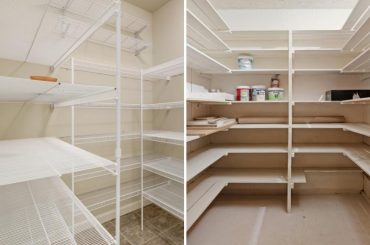
A reach-in pantry is a shallow closet-style pantry built directly into a wall or framed into cabinetry. It typically features one or two doors that open to reveal shelves arranged across the back or sides.
Unlike a walk-in, you can’t step inside, but everything is visible and within arm’s reach. Think of it as a highly efficient storage solution — larger than a standard kitchen cabinet, but more compact and accessible than a walk-in room.
Reach-in pantries are popular in homes that value storage but don’t have the space or layout for a walk-in option.
Pros of Reach-In Pantries
Space-Efficient
Reach-in pantries offer solid storage capacity while occupying a relatively small footprint. They’re ideal for kitchens where space is limited but functionality can’t be compromised.
Good Visibility
Because everything is laid out on a single wall, items are easy to see and grab. With smart organization like clear containers, pull-out drawers, or tiered shelving you can make the most of every inch.
Opting for glass doors adds even more convenience, allowing you to view the contents at a glance and stay on top of your pantry inventory.
Simpler Design & Installation
These pantries often fit into existing nooks or alcoves and don’t require major remodeling. You can often convert a hall or linen closet into a reach-in pantry with minimal effort.
Lower Cost
Compared to building a walk-in pantry, reach-ins generally require less material, less labor, and no additional structural changes. This makes them more budget-friendly during remodels or new builds.
Versatile Placement
Because they’re more compact, reach-in pantries can be integrated into various parts of your kitchen layout, including side walls, breakfast nooks, or even adjacent dining areas.
Cons of Reach-In Pantries
Limited Depth & Storage
While they offer more than a basic cabinet, reach-in pantries can’t match the volume of a walk-in. Large appliances, bulk goods, or oversized containers may not fit comfortably.
Organizational Challenges
Without proper storage solutions, items at the back of deep shelves can get buried or forgotten. It can be easy for these pantries to become cluttered if not maintained.
Less Flexible Layout
You’re typically working within a set space and dimension. Fixed shelving, shallow depth, or narrow access points can make it harder to fully customize or adapt the space as your storage needs evolve.
No Work or Prep Space
Unlike walk-ins, reach-in pantries don’t offer counter space for unpacking groceries or prepping food. They’re strictly for storage, not multitasking.
Best For
- Mid-sized kitchens that need extra storage but don’t have room for a walk-in
- Households with average storage needs, like weekly groceries, snacks, and dry goods
- Homeowners who prefer a clean, streamlined look without taking on a major renovation
- Organized cooks who appreciate having everything visible and within reach
Cabinet Pantry (or Built-In Pantry Cabinet)
What Is a Cabinet Pantry
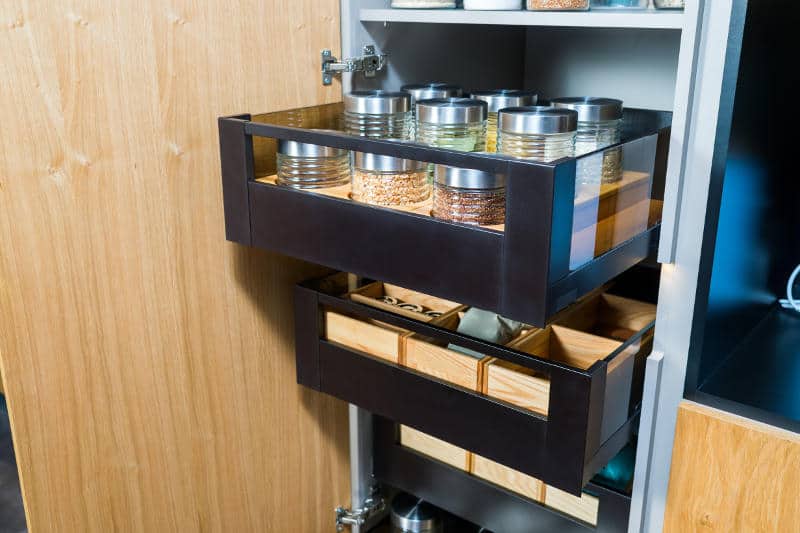
A cabinet pantry, sometimes called a pantry tower or utility cabinet, is a tall, vertical unit built into your kitchen cabinetry.
Unlike walk-in or reach-in pantries, cabinet pantries don’t require a separate room or closet — they’re seamlessly integrated into your kitchen layout and often placed alongside your refrigerator or oven for easy access.
Inside, these cabinets typically feature adjustable shelves, pull-out drawers, and sometimes custom inserts to store dry goods, canned foods, small appliances, and more.
Pros of Cabinet Pantries
Compact and Convenient
Cabinet pantries are perfect for maximizing storage in small kitchens, galley kitchens, or apartments. They offer a vertical solution that takes up minimal square footage while still holding a decent amount of pantry essentials.
Stylish Integration
Since they’re part of your kitchen cabinetry, cabinet pantries blend in beautifully with the overall design. You can match the doors, handles, and finishes to the rest of your kitchen for a sleek, built-in look.
Quick Access
Everything is within arm’s reach, making these pantries ideal for daily use. No need to step away from your main cooking zone, you just open the doors and grab what you need.
Budget-Friendly
Cabinet pantries typically don’t require major renovations or custom construction. They’re often included in standard kitchen cabinetry packages and are a cost-effective solution, especially for those on a tighter remodeling budget.
Easy to Maintain
Smaller than a walk-in or reach-in, cabinet pantries are easier to clean and keep organized, especially when equipped with the right inserts or pull-out trays.
Cons of Cabinet Pantries
Limited Capacity
Compared to walk-in and reach-in options, cabinet pantries offer the least amount of storage. If you shop in bulk, have a large family, or need room for appliances, this style might fall short.
Challenging Organization
Without the right storage solutions like pull-out shelves or labeled bins smaller items can get lost behind others. It’s easy for these pantries to become overstuffed or chaotic.
Not Ideal for Bulk Storage
While great for daily items like snacks, cereals, and spices, cabinet pantries typically don’t have room for stockpiled items like large bags of flour, extra paper towels, or backup appliances.
Accessibility Issues
The very top or bottom shelves may be hard to reach without a step stool, especially for shorter users or children.
Best For
- Small kitchens, condos, or apartments where every inch counts
- Minimalist cooks who prefer to keep only what they use regularly
- Singles or small families with moderate grocery storage needs
- Budget-conscious remodelers who want a pantry without a big investment
- Design-focused homeowners who want a seamless, built-in aesthetic
Pantry Style Comparison Table
Now that you’ve seen the details of each pantry type, here’s a side-by-side comparison to help you quickly evaluate how they stack up across key categories like space, cost, and functionality.
| Feature | Walk-In Pantry | Reach-In Pantry | Cabinet Pantry |
|---|---|---|---|
| Space Required | High – needs a dedicated room or closet | Moderate – fits into wall or nook | Low – fits into kitchen cabinetry |
| Storage Capacity | Very High | Moderate | Low to Moderate |
| Best For | Large families, home chefs | Medium households, efficient storage | Small households, tight spaces |
| Ease of Access | Good, but may require more walking | High – items are within reach | Very High – right at your fingertips |
| Customization | Highly customizable | Somewhat customizable | Limited to cabinet inserts |
| Visibility | High – full view of all items | High – single wall display | Varies – may require pull-outs |
| Budget | $$$ – higher due to construction | $$ – mid-range | $ – most affordable |
| Ease of Installation | Low – often needs construction | Moderate – can use existing space | High – integrates with cabinetry |
| Adds Home Value | Yes – often viewed as a luxury | Sometimes – depends on design | Less impact, but adds convenience |
How to Choose the Right Pantry Design for You
Still unsure which pantry design is right for you? These key questions will help you determine the best fit for your lifestyle and kitchen layout.
1. How Much Space Do You Realistically Have?
- A walk-in pantry might be the dream, but if you’re sacrificing half your kitchen or squeezing it into an awkward spot, it may not be the best use of space.
- Reach-in pantries can give you excellent storage without eating into your floor plan.
- Cabinet pantries are perfect for tight spaces where you want vertical storage with minimal footprint.
2. How Often Do You Cook or Entertain?
- If you’re an avid home cook or baker who uses lots of ingredients and appliances, a walk-in or reach-in pantry can give you the breathing room you need.
- For casual cooks or smaller households, a cabinet pantry may offer all the daily access you need without extra steps or space.
3. What Kind of Storage Do You Really Need?
- If you shop in bulk, store backup appliances, or want space for extra pantry staples, walk-in pantries are ideal.
- If you just need a home for snacks, canned goods, and spices, a cabinet or reach-in pantry might be all you need.
4. Are You More Concerned With Convenience or Capacity?
- Cabinet pantries keep everything close to your prep zone—super convenient for daily cooking.
- Walk-in pantries offer more room but may require more walking, organizing, and upkeep.
- Reach-ins balance the two, offering more space than cabinets without the walk-in footprint.
5. What’s Your Budget and Timeline?
- Cabinet pantries are the most budget-friendly and quickest to install, especially if you’re already updating cabinetry.
- Reach-ins are mid-range, especially if they fit into existing walls or closets.
- Walk-ins are a bigger investment and may require framing, flooring, electrical work, or lighting.
6. Can You Combine Pantry Types?
You don’t have to stick to just one style. Many kitchens benefit from a hybrid approach:
- A cabinet pantry near the cooking zone for quick-access items
- A reach-in pantry for backup ingredients, baking supplies, or bulk items
- Even a small walk-in pantry tucked behind a pocket door for families that need maximum space
Ultimately, the best pantry design is the one that fits your situation. Think about how you shop, store, and use your kitchen, and the right pantry style will naturally fall into place.
You might also like: Open vs. Closed Pantry Shelving: What to Know Before You Decide
Final Thoughts
Choosing the right pantry design isn’t about following trends or picking the “most popular” option. It’s about recognizing your day-to-day needs, your space limitations, and what will make cooking, hosting, or even unpacking groceries feel effortless.
As kitchens become more multifunctional, so should your pantry. Whether you’re maximizing every vertical inch in a small condo or carving out a walk-in space in a larger home, your choice can add more than just storage — it can add comfort, flow, and peace of mind.
The best part? You’re not locked into one option. You can mix, match, or evolve your setup as your lifestyle changes. The goal is simple: to create a kitchen that feels as good to use as it does to look at.
Which pantry style suits your home best — and why? Share your thoughts in the comments below!