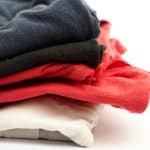
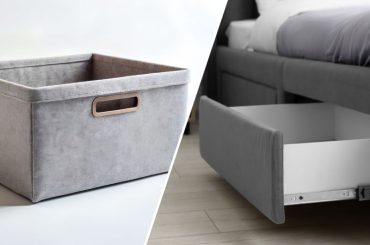
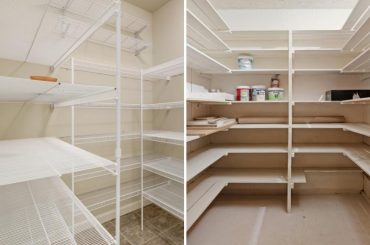
Do you dread opening your closet, fearing a cascade of clothes, shoes, and accessories tumbling out? A disorganized closet can make mornings stressful and finding your favorite items a hassle.
Fortunately, with a little creativity and strategic planning, you can turn your chaotic closet into a functional and beautiful space.
This guide will walk you through the best tips, tricks, and tools to organize your closet and keep it that way.
1. Declutter First
The first and most crucial step in organizing any space is decluttering.
Over time, it’s easy to accumulate items that we no longer use or need, especially in the closet. This could include old clothes, worn-out shoes, outdated accessories, or items that no longer suit your lifestyle.
Begin by removing everything from your closet, including clothes, shoes, bags, and accessories. This gives you a clean slate and allows you to assess the true contents of your wardrobe.
Then, sort the items into four piles:
- Keep: Items that are in good condition, still fit, and are regularly used.
- Donate: Clothes or accessories that you no longer use but are still in good condition.
- Sell: Items that are gently used but have value, which you can sell online or through consignment shops.
- Discard: Items that are damaged, stained, or no longer functional.
When evaluating each item, be honest with yourself about its relevance and practicality. If you haven’t worn something in over a year or it no longer fits right, it might be time to let it go.
Try to make it a habit to go through your closet twice a year — for example, once at the start of the year and again at the end — to review what’s there.

2. Sort by Category
After decluttering, the next step is to sort your remaining items into clear categories. Sorting your wardrobe helps you maintain a well-organized closet and makes it easier to visualize what you own.
Grouping similar items together not only reduces chaos but also streamlines your morning routine, as you’ll know exactly where to find what you need.
Here are some categories you can use:
- Clothes: Separate your clothing into categories such as tops, pants, skirts, dresses, and outerwear. You can further break down these categories by function, such as work clothes versus casual wear, to make it even easier to access what you need.
- Shoes: Group your shoes by type, such as sneakers, boots, sandals, or formal shoes. This will allow you to find the right pair quickly.
- Accessories: Keep scarves, belts, hats, or jewelry together in their own designated sections for easy access.
- Seasonal items: If you live in a place with distinct seasons, consider separating seasonal clothing. Store winter coats and heavy sweaters separately from lighter summer apparel to save space and make it easier to find the right pieces.
How you choose to categorize and divide your items depends on the variety of your wardrobe and what you use most frequently. Tailor your system to fit your lifestyle, and choose what works best for your needs.
3. One In, One Out Rule
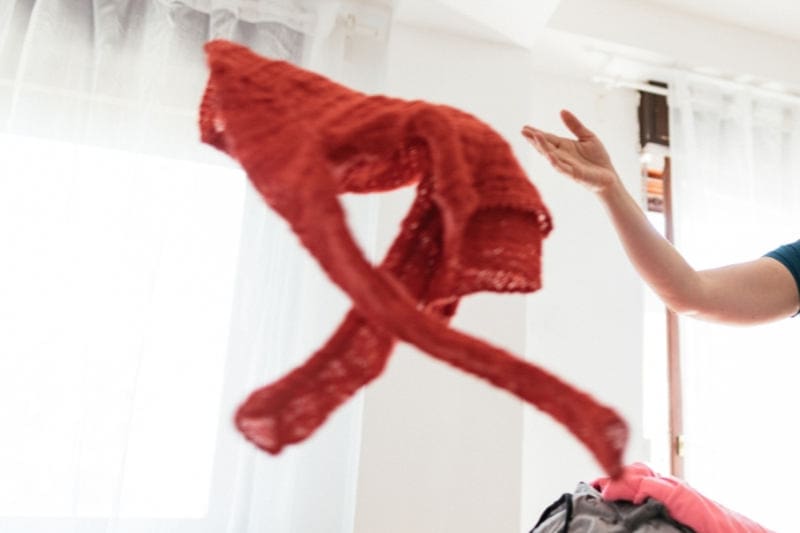
To prevent your closet from becoming overcrowded, the “One In, One Out” rule is a great strategy. This approach helps maintain balance in your wardrobe by ensuring that for every new item you add — whether it’s a shirt, pair of shoes, or accessory — you remove one item to make space.
When purchasing new clothing, commit to donating, selling, or discarding an item that no longer fits or is no longer needed. And instead of adding new items on a whim, focus on acquiring quality pieces that you truly love and will wear frequently.
Additionally, if you’re bringing in more seasonal items, take the time to clear out pieces that are no longer practical for the upcoming season. This way, your wardrobe stays functional, organized, and clutter-free.
4. Use the KonMari Method
Marie Kondo’s KonMari Method is a popular decluttering philosophy that can transform your approach to closet organization. The core concept of this method is to keep only the items that “spark joy” — meaning those that truly add value to your life.
To apply the KonMari method, start with your clothes by evaluating each piece individually. Hold each item and ask yourself, “Does this item spark joy?” If it does, keep it. If not, express gratitude for its service and let it go.
Kondo suggests categorizing by type rather than location. This means grouping clothes by category (e.g., shirts, pants, dresses) and then evaluating each item one by one.
The KonMari method encourages a mindset of gratitude for the items you choose to keep, ultimately helping you create a closet full of things you genuinely love and need. This approach reduces decision fatigue and simplifies your daily routine, making it easier to maintain a functional and joyful wardrobe. For more details, visit their website.
5. Seasonal Rotation
If your closet space is limited or you live in an area with changing seasons, rotating your wardrobe is a smart solution to help manage your space. Seasonal rotation not only frees up valuable closet space but also protects your clothing from unnecessary wear and tear.
For example, during the warmer months, store your heavy winter coats, sweaters, and scarves in bins, and then rotate your summer clothing and sandals into your closet. Similarly, when winter approaches, store your summer clothes in bins or under-bed storage to clear up space for cold-weather wear.
Label your storage bins according to the season (e.g., “Winter Clothing” or “Summer Dresses”) to make it easier to access the right items when the season changes.
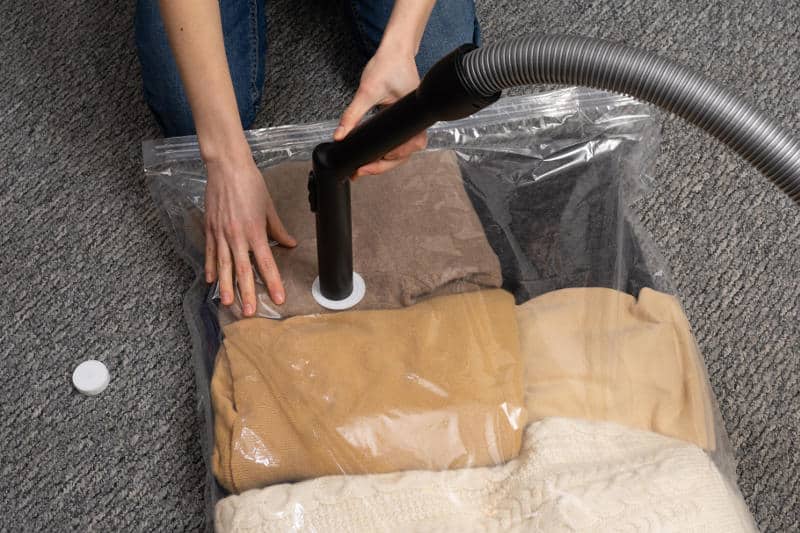
If you have bulky items like coats or sweaters, consider using vacuum-sealed bags to save space and protect them from dust or moisture.
Finally, if your closet space is tight, designate a small section for the current season’s clothes and store the rest elsewhere, ensuring your wardrobe is organized and manageable all year round.
6. Create Zones
Creating zones within your closet is a fantastic organizational technique that ensures everything has a designated place.
This method involves dividing your closet into specific sections based on the type of items you own, making it much easier to access what you need and helping keep everything in order. For example, you could establish:
- Workwear zone: This section would be dedicated to work-related attire, like suits, blouses, and dress shirts.
- Casual wear zone: Group your casual clothes here, including t-shirts, jeans, and weekend wear.
- Accessory zone: Store your accessories such as scarves, belts, hats, and handbags in this area to keep them organized and easy to find.
- Shoes zone: Set aside a space just for shoes, whether on a rack, inside bins, or neatly lined up, so they stay tidy and easy to grab.
By creating these specific zones, you can streamline your daily routine and ensure that your closet remains organized and functional.
7. Utilize Vertical Space
One of the most underutilized areas in most closets is the vertical space. The height of your closet often goes unused or is only sparsely utilized, but it’s one of the best ways to maximize storage.
Here are some ideas for smartly using that space:
- Add shelves: Install shelves on the upper walls of your closet to store items you don’t need every day, like extra bedding, seasonal clothing, or shoes in bins.
- Stackable bins: Use stackable plastic or fabric bins for an organized way to store smaller items like scarves, hats, or shoes. These bins from Amazon come with wheels, making them easy to move and reposition as needed.
- Wall-mounted hooks or pegboards: Attach hooks or pegboards to the closet wall to hang accessories, hats, belts, or bags. This keeps these items visible and accessible while freeing up shelf and drawer space.
- Hanging storage baskets: Use hanging baskets from the closet rod or ceiling to store smaller items. These baskets can be positioned higher up to provide easy access to your other items.
Using vertical space maximizes closet storage without encroaching on valuable floor space, and it allows you to store less-used items up high while keeping frequently accessed items within reach. It’s a highly effective space-saving strategy.
8. Double-Hanging Rods
If your closet is short on hanging space, then double-hanging rods can be a game-changer. By adding a second rod underneath your primary hanging rod, you can instantly double your available hanging space.
To make the most of double-hanging rods, place the upper rod at a standard height to accommodate longer items like dresses and coats. The lower rod should be positioned at a shorter height for shirts, blouses, skirts, or pants. You can even use the second rod to categorize your clothing, such as hanging formal wear on the top rod and casual wear on the bottom, for better organization.
Double rods are particularly helpful in kids’ closets, where the shorter lower rod allows children to easily access their clothes.
Looking for a quality option? Check out these double-hanging rods from Storage Maniac.
9. Shelf Dividers
If you store folded clothing on shelves, shelf dividers are a great tool to maintain neatness and prevent piles from toppling over.
By using dividers, you can separate stacks of clothes such as sweaters, jeans, or t-shirts, ensuring that everything stays organized. This method not only helps keep order but also makes it easier to find and pull out specific items when needed.

- SHELF HELPER: Our shelf dividers maintain a seamless...
- UPGRADED MATERIALS: These closet shelf dividers are...
- EASY TO INSTALL: Just slide into your shelves and see...
- NOTES: You will receive 12 pieces of acrylic shelf...
Adjustable dividers are particularly beneficial because they can be repositioned to fit different clothing sizes or categories, offering more flexibility and maximizing shelf space.
10. Slimline Hangers
Swapping out bulky hangers for slimline velvet hangers can free up a significant amount of space in your closet. Regular plastic and wooden hangers are often twice as thick as slimline options, making this small change a big space-saver.
In addition to maximizing space, slimline hangers create a more uniform and aesthetically pleasing look in your closet, making it appear less cluttered. The velvet surface also prevents clothes from slipping off, ensuring that your garments stay securely in place.
These hangers are affordable, and you can easily find them online in various sizes and colors to suit your needs.
11. Over-the-Door Organizers
The back of your closet door offers valuable space that can be used for additional storage. Over-the-door organizers are a fantastic solution for storing small items that don’t need to be hung on rods.

- Large Size & Capacity – Our over the door organizer...
- Stable & Well-Structured – Designed with stitched...
- 10 Mesh Side Pockets – The wall hanging storage...
- Clear PVC Window – Each pocket of the door hanging...
A hanging shoe rack, for instance, can help keep shoes organized and off the floor. You can also use organizers with clear pockets to store socks, scarves, belts, ties, or small handbags — making them visible and easy to access without taking up precious space.
12. Rolling Storage Carts
Rolling storage carts are an incredibly versatile storage solution, especially for tight closet spaces. These carts offer mobility, making it easy to slide them in and out of your closet as needed.
They can be used for a variety of purposes, such as storing shoes, accessories, smaller items, or even off-season clothing. Rolling carts are particularly useful for accessing deep closet spaces where shelves may be hard to reach.
In a walk-in closet, they can serve as a mobile storage unit for folded clothes, workout gear, or even laundry, maximizing both space and convenience.

13. Expandable Closet Organizers
Expand your storage capacity with adjustable and expandable closet organizers. These organizers, including rods, shelves, and drawer systems, can be customized to fit your closet’s size and shape. This flexibility allows you to maximize your storage space while keeping everything arranged.
Expandable closet organizers can grow or shrink depending on your storage needs, making them perfect for closets of any size. For example, you can install expandable shelving units or adjustable hanging rods to accommodate varying amounts of clothing or accessories.
14. Drawer Organizers
One of the most efficient ways to keep smaller items organized in your closet is by using drawer organizers. These handy tools help separate your clothes or accessories, ensuring that everything has its designated spot.
Drawer dividers are commonly used for keeping socks and underwear neatly separated, preventing them from getting tangled or mixed up. Smaller compartments can be used for jewelry, watches, or other small accessories.
For added flexibility, look for adjustable organizers that will fit the size of your drawers. They allow you to maximize drawer space by customizing the compartments to suit your specific needs.
You may also like: How to Keep Your Clothes Fresh in Drawers
15. Label Everything
Labeling is one of the simplest yet most effective organizational hacks for your closet. It helps you quickly identify where items belong and ensures your space stays organized over time, even with frequent use.
Labels also make it easier for others, such as family members or roommates, to return things to the right spot after laundry or tidying up.
You can label almost anything in your closet, from storage bins, baskets, and boxes to hanging rods and drawers. Be specific with your labels (e.g., “Underwear,” “Scarves,” or “Seasonal Shoes”) to help you locate items quickly when needed, making your closet more efficient and easier to navigate.

16. Clear Storage Bins
Clear storage bins are incredibly effective for keeping your closet organized. Unlike opaque containers, transparent bins allow you to see exactly what’s inside without needing to open them, saving time and effort.
While labeling isn’t strictly necessary, it can still be helpful, especially if you have many bins or store similar items in them. Labeling can further streamline your process by allowing you to quickly locate what you’re looking for, even if the bins are stacked or stored out of sight.
Tip: To maximize vertical space, stack bins neatly, ensuring that bins of the same size are stacked together for stability and easy access.
17. Hooks and Racks
Hooks and racks are versatile storage solutions that can be installed inside your closet, on doors, or on walls to help maximize space. They can hold various items such as bags, belts, scarves, hats, and accessories, keeping your closet organized and clutter-free.
Adhesive-backed hooks work well for lighter items, while screw-in hooks provide more support for heavier pieces. On the other hand, a simple rack with multiple pegs can neatly display and organize multiple accessories.
For a practical organizational solution, consider installing hooks to create a system where you can hang an entire outfit — shirt, pants, and shoes — in one place for quick and easy access each day.
18. Lazy Susans
A Lazy Susan is a rotating storage tray that can be incredibly helpful in closets, making items more accessible. It’s perfect for organizing smaller accessories such as shoes, scarves, or jewelry, especially in spaces with limited room.
The rotating feature allows you to easily spin the tray and access items stored in the back, eliminating the need to sift through drawers or boxes. This makes it much simpler to find what you need, even in a crowded closet.
19. Tension Rods
Tension rods are adjustable, versatile tools that can fit into tight spaces without the need for permanent installation, making them ideal for creating additional storage and organizing accessories or clothing in your closet.
These rods are perfect for hanging scarves, belts, or ties, allowing you to roll and store them for easy access. If installed at a lower level, a tension rod can even serve as a DIY shoe rack that is positioned at an angle. This solution works especially well in tight spaces or for smaller shoe collections.
20. Cascading Hangers
Hanging multiple shirts or pants on basically one hanger is a great way to save valuable space on shelves while keeping them easily accessible.
Cascading hangers are particularly effective for this, as they feature hooks or loops that allow you to hang multiple items on one hanger without taking up much room.

- Durable Closet Organizers and Storage - Made from...
- Newly Designed Easy To Use Magic Hangers - Each...
- Space Saving Clothes Hangers - The scientific design of...
- College Dorm Room Essentials - Multifunctional five...
For a more customizable solution, opt for adjustable cascading hangers or multi-tiered hangers. These can be expanded or contracted to suit your needs as your accessory collection grows.
21. Under-Bed Storage
If you’re short on closet space, under-bed storage is a fantastic solution for storing clothes and shoes that you don’t wear as often. It helps keep your closet neat and organized while still providing extra room for your belongings.
Opt for low-profile bins or boxes that slide easily under your bed, ideal for seasonal clothing or pairs you wear less frequently. As it was mentioned, transparent bins are especially handy, as they allow you to quickly identify the contents without having to pull out and open each box.
Some under-bed storage bins even come with wheels, making it even easier to slide them in and out for quick access.
22. Shoe Racks
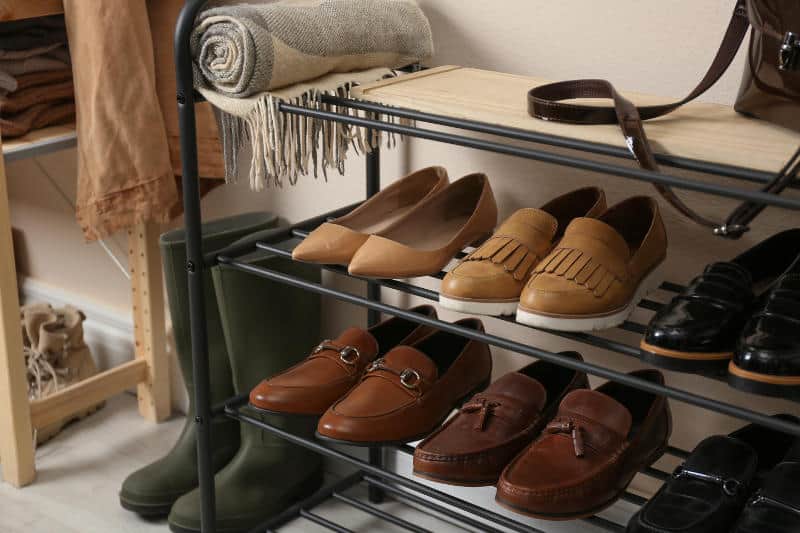
Shoe racks are a classic and efficient way to organize your shoes, ensuring they stay visible and easily accessible. Tiered shoe racks, in particular, help maximize vertical space and allow you to store shoes neatly, making them perfect for smaller closets.
For added versatility, look for adjustable racks that let you modify the space between each tier to accommodate taller shoes, like boots.
If closet space is tight, consider placing a shoe rack near your entryway for easy access to frequently worn shoes, while reserving the closet for pairs you use less often.
23. Pegboards for Heels
A pegboard is both a stylish and practical solution for organizing high-heeled shoes. It not only saves valuable closet space but also turns your footwear into a chic display, adding a decorative touch to your closet.
To set it up, hang a pegboard on the inside of your closet door or on an empty wall. Add pegs to securely hold your heels in place, creating an organized and visually appealing storage area.
You can customize the pegboard with adjustable pegs to accommodate different heel sizes or adjust the spacing to fit your needs.
24. Jewelry Organizers
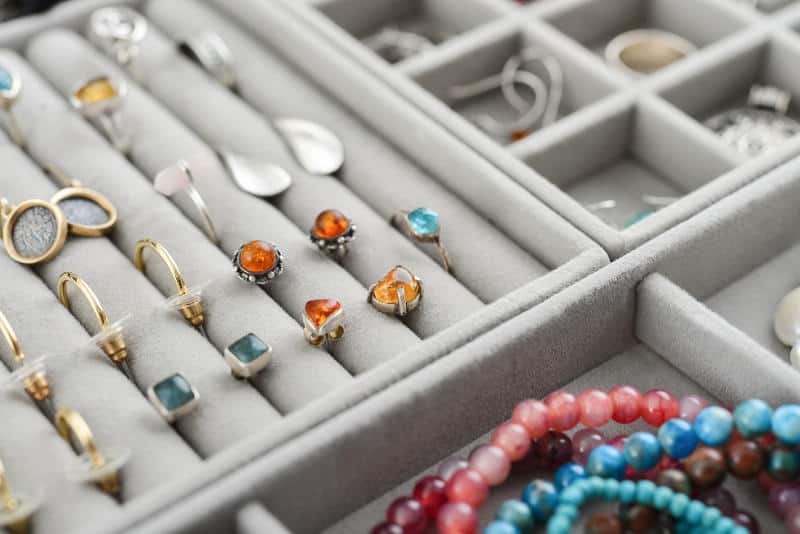
Jewelry organizers are essential for keeping your jewelry neat, accessible, and protected from damage. Whether you have a small collection or an extensive one, organizers ensure your pieces stay tangle-free and easy to locate.
Here are some options for organizing your jewelry:
- Trays: Jewelry trays with individual compartments are perfect for storing rings, necklaces, bracelets, and earrings. Place them in drawers or on shelves to keep items separated.
- Hooks and pegs: For necklaces, attach hooks or pegs to a board or inside a drawer. This keeps chains and pendants organized and tangle-free.
- Dedicated drawers: Invest in a drawer insert specifically designed for jewelry. These inserts typically have small sections to separate your pieces and may feature soft padding to protect delicate items.
- Jewelry boxes: A classic option, jewelry boxes provide a contained space to store your items and protect them from dust and damage.
25. Belt/Tie Racks
Belt and tie racks are perfect for keeping your accessories organized and ensuring they are at hand when you need them. These racks save closet space while keeping your belts and ties in excellent condition.
You can install dedicated racks inside your closet, which feature hooks, pegs, or loops to separate your belts and ties and prevent tangling.
If you prefer a more discreet storage option, you should consider using a pull-out tie or belt rack that can be installed inside a closet drawer. This system allows you to easily access your accessories without disrupting the rest of your closet.
26. Sort by Length
Sorting by length is a practical and efficient method to organize your hanging clothes. By grouping garments based on their length, you can make optimal use of your closet’s vertical space.
Start by placing longer items such as dresses, coats, and outerwear on one side, ensuring they have enough room to hang freely without being overcrowded. On the other side, hang shorter garments like shirts, blouses, and skirts.
The space below these shorter items can be utilized for additional storage, such as folding shirts or pants. If needed, you can also install a second rod beneath to further maximize your closet’s available space.
27. Organize by Color
Organizing your clothes by color not only adds a visually pleasing element to your closet but also makes it easier to find specific items. By grouping your clothing into color blocks or arranging them in a gradient, you create a functional system that enhances both the aesthetic and practicality of your wardrobe.
One approach is to arrange your clothes from light to dark, which creates a visually striking effect similar to a rainbow. And if you prefer a simpler method, you can group your clothes into distinct color blocks (e.g., whites, blacks, blues, reds). This way, you’ll be able to quickly spot the color you’re looking for, especially during busy mornings.
28. Group by Use
Organizing your closet by use is an effective strategy for saving time. By keeping the items you wear most often easily accessible, you can quickly grab what you need, especially on busy mornings.
Place frequently worn items like your everyday workwear or casual clothes at the front of the closet or at eye level for convenience. Seasonal items such as coats or heavy sweaters should be stored towards the back or on higher shelves to keep your closet organized.
Off-season clothing, meanwhile, can be stored in bins or under-bed storage to free up space for current season essentials.
For even more convenience, consider grouping complete outfits together, such as a shirt paired with matching pants or accessories, so you can quickly put together your look with minimal effort.
29. Keep It Clean
Maintaining a clean closet is essential for both organization and preserving the quality of your clothes and accessories. Regular cleaning prevents dust, lint, and dirt buildup, helping your closet stay fresh and your items in good condition.
Here are some basic things you need to do to keep your closet clean:
- Vacuum the floors: Use a vacuum with a soft brush attachment to clean the floor of your closet, especially if it’s carpeted. This will help remove dust and debris that can accumulate over time.
- Dust shelves and hanging rods: Wipe down shelves and hanging rods regularly to prevent dust buildup. A microfiber cloth or a soft duster works well for this task.
- Wipe down storage bins: If you use bins or boxes, be sure to wipe them down, especially around the edges, to remove dust.
- Freshen the air: Consider using a closet air freshener or scented sachets to keep your closet smelling fresh, especially in smaller spaces where odors tend to linger.
30. Use Lighting
Closets, especially those with limited natural light, can feel dim and cluttered. Installing LED lights or motion-sensor lighting can dramatically improve visibility, making it easier to navigate your closet even in low light.
LED strips are a simple solution, as they can be placed along the shelves or the top of your closet for bright, even lighting that illuminates your clothes.
If your closet doesn’t have a light fixture, motion-sensor lights are a great option. These lights automatically turn on when you open the door, providing instant illumination without the need to flip a switch.
For closets with no wiring, battery-operated lights are an easy and affordable alternative. You can attach them to the ceiling or shelves and turn them on when needed.
31. Hang Curtains
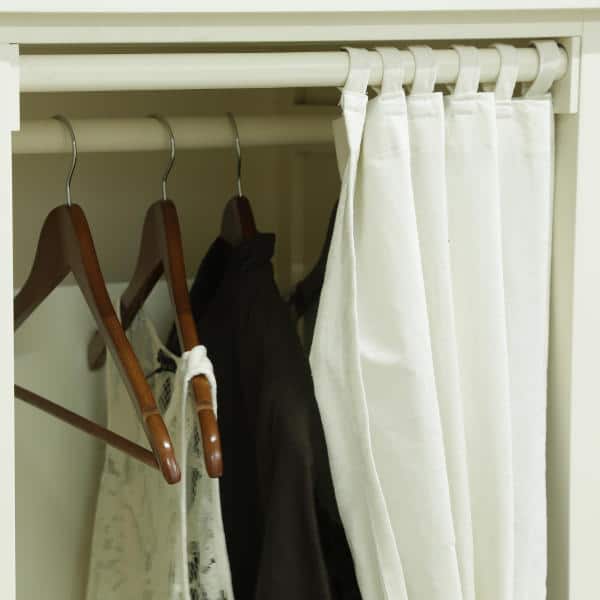
If your closet lacks doors, hanging curtains is a stylish and functional solution. Curtains can help conceal clutter while also adding a touch of design, making your closet look more organized and aesthetically pleasing.
To implement this, you can install a simple curtain rod above the entrance to your closet and hang fabric of your choice. You can opt for anything from neutral tones to bold patterns, depending on the look you want to achieve.
For a clean, tidy appearance, choose sturdy fabrics like linen or cotton. These materials work well, especially in larger walk-in closets or if you prefer to keep your wardrobe hidden from view.
32. Create a Capsule Wardrobe
A capsule wardrobe is a minimalist approach to clothing, focusing on a small, curated collection of versatile, high-quality pieces that easily mix and match. By reducing the number of items in your closet, it makes organization and accessibility much simpler.
Typically, a capsule wardrobe consists of around 30-40 pieces, including clothing, shoes, and accessories. The key is to focus on essential items that pair well together while eliminating clothing that doesn’t fit your personal style or is seldom worn.
Choose timeless, versatile pieces that can be styled in multiple ways — think neutral colors, classic cuts, and items that are easy to layer or accessorize. This strategy ensures that your closet remains organized, functional, and tailored to your needs.
Final Thoughts
An organized closet doesn’t just look great but also saves you time, reduces stress, and maximizes your wardrobe’s potential. By decluttering, categorizing, and using smart storage solutions, you can create a functional and visually pleasing space tailored to your needs.
Before you dive into organizing, though, it’s worth making sure your closet layout is working for you — not against you. Avoiding common closet layout mistakes can help you make the most of your space from the start.
Start small, stay consistent, and enjoy the satisfaction of a perfectly organized closet!