Tiling over tiles is an easy way to update a floor or wall without tearing out what you already have. As long as the existing tiles are in good condition and free of mold, installing new tiles on top won’t compromise the integrity of the surface. So, how do you make sure you’re doing it the right way?
Read on to learn everything you need to know about tiling over tiles and choosing the right adhesive for the job.
The Faster the Adhesive Cures, the Better
Curing time plays a major role when tiling over existing tiles. Smooth, non-porous tiles can make it hard for newly placed tiles to stay in position while the adhesive dries, so a quick-drying formula is especially important. Slow-curing adhesive can allow tiles to shift, slide, or even detach before setting.
If your adhesive takes more than 24–48 hours to dry, it’s worth choosing a faster option. Faster curing means you won’t have to avoid the room for long on floor projects, and it reduces the risk of wall tiles slipping or falling.
The surface you’re covering also matters. If the existing tiles are coarse, you may be able to get away with a slower cure. But on sleek, glossy tiles, a fast-curing adhesive is essential to keep everything firmly in place.
Premixed Adhesive Works Better Than Powder Adhesive
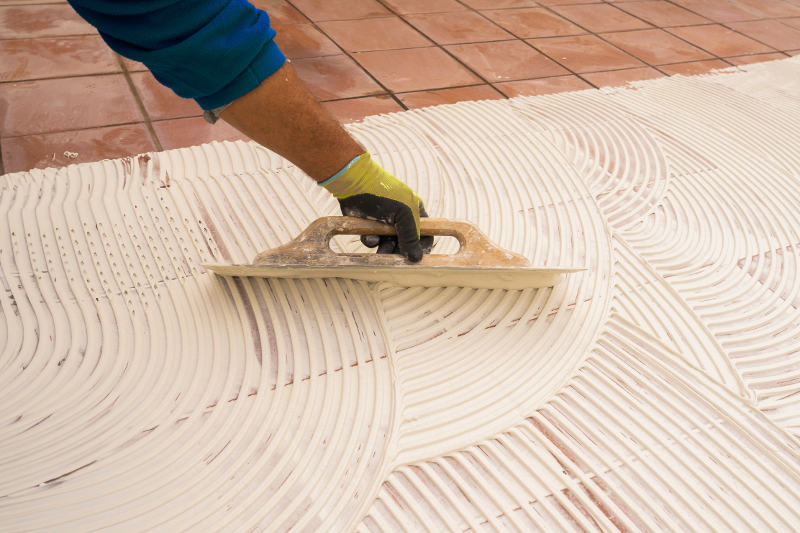
For tiling over existing tiles, premixed adhesive is usually the better choice. It’s naturally thicker, which is important when you’re bonding to a smooth, non-porous surface. Powdered adhesive, on the other hand, can easily end up too thin or runny, weakening the bond between the two tile layers.
While powdered adhesive gives you more control over consistency, that flexibility isn’t particularly helpful in this situation — you need a reliably thick mix for the best results. Premixed adhesive can be a bit harder to work with since you can’t adjust it, but it delivers a more dependable bond on slick surfaces.
Another drawback of powdered adhesive is the potential for inconsistency. Mixing multiple batches can lead to slight variations in thickness, which can affect drying time and tile stability. Unless you’re very experienced at mixing adhesives and can maintain a uniform consistency, premixed adhesive is the safer and more effective option.

Go For Adhesives That Work Well With Smooth Surfaces
For the best results, choose an adhesive specifically designed to bond to smooth, non-porous surfaces like tiles.
Many tile adhesives are rated for several materials, but coarse surfaces such as concrete, cement, or wallboard are far easier for adhesives to grip. Slick tile surfaces require an adhesive formulated to adhere firmly despite the lack of texture.
Choose a Strong, High-Bond Adhesive
When tiling over existing tiles, strength matters more than it does on standard surfaces. Smooth tiles don’t give the adhesive much texture to grip, so you need a high-bond formula that can “bite” into the old surface and hold the new tile in place long-term.
A strong adhesive also reduces the chances of tiles shifting, sagging, or detaching later — especially in bathrooms or high-traffic areas.
For a tile-over-tile project, look for a “latex-modified” or “polymer-modified” adhesive designed for non-porous surfaces. These adhesives bond more aggressively and stay strong long-term. If you’re working on floors, especially ones that might flex or have heating systems, choosing a flexible adhesive provides even better durability.
One reliable option is Roberts 5900-1 Ceramic Tile Adhesive. It spreads easily, cures quickly, and has a naturally thicker consistency that helps keep tiles from sliding out of place while they set.
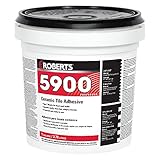
- For the interior installation of porous and semi-porous...
- Bonds with concrete, masonry, cement backer board...
- Ideal for direct bond installation
- Premixed and ready-to-use for faster installation
There Are Different Adhesives for Outdoor and Indoor Use
Another key factor when choosing an adhesive is whether your project is indoors or outdoors. Outdoor tiling requires an adhesive specifically rated for exterior conditions, since temperature swings, moisture, and weather exposure can affect how well the adhesive performs.
Using an outdoor-approved adhesive helps prevent issues like mold or moisture buildup if water seeps between the tiles. Indoor adhesives typically don’t face these stresses unless the space is frequently exposed to moisture or strong drafts, so choosing the right formula for your environment is essential for long-term durability.
It’s Important to Determine How Much Adhesive You Want Beforehand
Another important part of choosing an adhesive is knowing how much you’ll need before you begin. Having the right amount on hand prevents you from running out mid-project and having to stop to order more.
The amount required depends on several factors. Wall tiles typically need less adhesive than floor tiles because they’re usually smaller and cover a smaller area — unless you’re tiling an entire bathroom, of course. Floor tiles generally require more adhesive, and as a rough estimate, you can expect about 45 square feet of coverage per gallon.
Actual coverage will vary based on:
- The thickness of the adhesive layer
- The type and size of the tiles
- The specific adhesive you’re using
Wall tiles often provide greater coverage per gallon since they don’t need as heavy a layer.
To determine how much adhesive you need, measure the area you plan to tile and apply the coverage ratio above. It’s always smart to round up so you won’t risk running short before the project is finished.
Things to Consider Before Tiling Over Tiles
Now that you know what to look for in an adhesive, there are a few important factors to consider before tiling over your existing tiles:
- The current tiles must be flat to ensure the new layer sits level and stable.
- Check for gaps where moisture or mold could develop.
- Remember that adding a second layer of tile increases floor height or reduces wall clearance.
- The adhesive must be able to bond tile to tile effectively.
- Clean the old tiles thoroughly to maximize adhesion.
- Make sure none of the existing tiles are loose.
Keep in mind that raising the height of the floor can create tripping hazards or interfere with doors, thresholds, or fixtures. This isn’t usually an issue for walls, but floors require more attention.
Ultimately, the success of a tile-over-tile project comes down to the condition of the existing surface. Uneven, damaged, or loose tiles can compromise the stability of the new layer. If the foundation isn’t sound, the new tiles may not adhere properly or could fail over time. Be sure the surface is solid before you begin.
Final Thoughts
Overall, you can successfully install new tiles over existing ones as long as you use the right adhesive and take your time. However, it’s not always the best option — especially if the tiles underneath are damaged or in poor condition.
Tiling over uneven, loose, or heavily worn tiles can compromise the stability of the new layer and increase the chances of tiles loosening or failing later on. In situations like that, it’s better to remove the old tiles first. It may take more work upfront, but it prevents you from having to tear out both layers down the road.