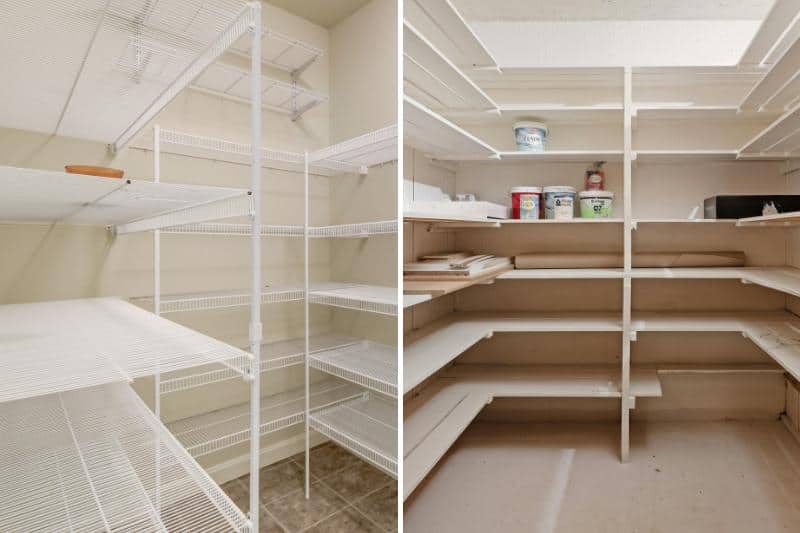
In this article, we’ll talk about two common types of pantry shelving: wire and wood. Each comes with its own pros and cons, and the best choice depends on your space, your needs, and your preferences. Let’s break them down.
Wire Shelving: Lightweight and Functional
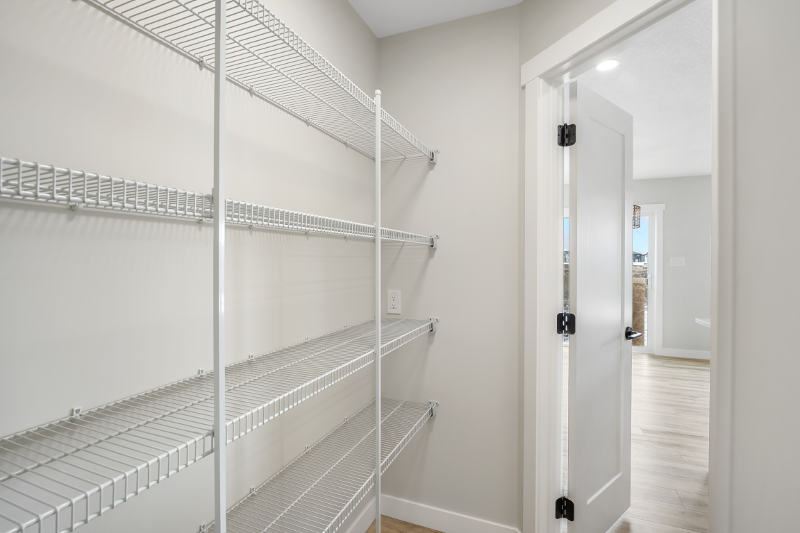
Wire shelving is a popular choice for pantries thanks to its practical design and affordable price point. Typically made from metal and coated with a protective powder finish, wire shelves offer an open, airy structure that promotes airflow and keeps your pantry feeling fresh.
While not always the most stylish option, wire shelving shines in terms of function, particularly for quick upgrades or rental-friendly setups.
Pros of Wire Shelving
- Air Circulation: One of wire shelving’s biggest advantages is its ventilation. The open-grid design allows air to flow freely around stored items, helping to prevent moisture buildup and reduce the risk of mold or mildew.
- Budget-Friendly: Wire shelves are significantly more affordable than wood or custom cabinetry, making them an ideal choice for budget-conscious homeowners or renters. They’re widely available in standard sizes and kits online and at home improvement stores.
- Lightweight & Easy to Install: Unlike heavier materials, wire shelves are lightweight and usually come with easy-to-install mounting systems. This makes them a favorite for DIYers or those looking for a quick solution without the need for professional help. They’re also great for temporary storage or rental spaces where permanent alterations aren’t possible.
- Low Maintenance: Wire shelves require minimal upkeep. Dust and spills can be cleaned with a simple wipe-down using a damp cloth, and their non-porous coating resists staining and odor absorption. They’re also less prone to attracting pests since there are fewer crevices for crumbs or food residue to hide.
Cons of Wire Shelving
- Unstable Surface: The grid-like surface can be problematic for smaller or oddly shaped items. Bottles may wobble, and packages can tip over or slide through the gaps. This often requires the use of shelf liners or baskets to create a more stable surface.
- Limited Aesthetic Appeal: Wire shelving tends to look utilitarian and industrial. While it works well in laundry rooms or garages, it may not blend seamlessly with high-end kitchen decor or more curated pantry designs. Its appearance can feel basic or out of place in elegant or traditional interiors.
- Weight Limits: Standard wire shelves aren’t designed to handle heavy loads. Storing large appliances, cases of canned goods, or bulk ingredients may cause sagging or damage over time unless you use reinforced brackets or supports. Always check weight limits before loading them up.
- Potential for Snags: The exposed wires can sometimes snag delicate packaging, plastic bags, or even cloth items like aprons or towels stored nearby. Without smooth surfaces or shelf liners, this can become a minor nuisance during daily use.
Wood Shelving: Durable and Stylish
Wood shelving brings warmth, character, and a sense of permanence to any pantry space. Whether made from solid hardwood, plywood, or medium-density fiberboard (MDF), wood shelves are a staple in both traditional and modern home design.
With their solid structure and endless customization options, they’re especially popular in built-in pantries and high-end kitchen renovations where visual appeal and lasting durability are top priorities.
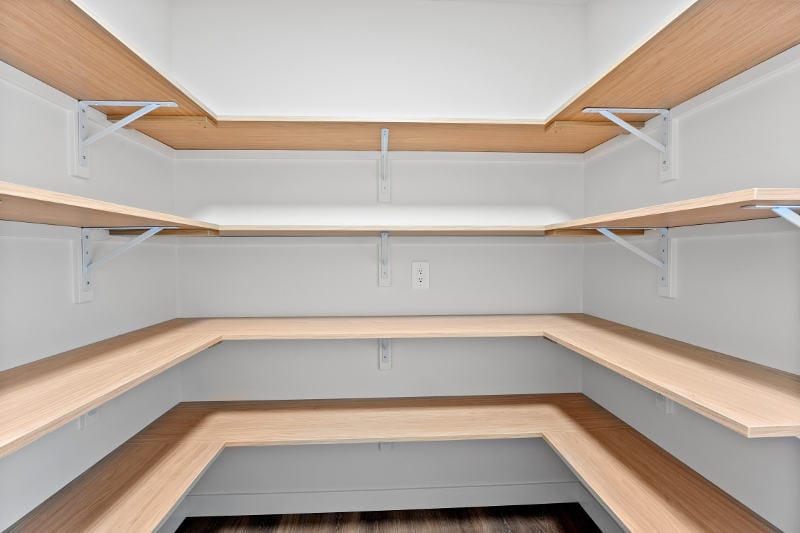
Pros of Wood Shelving
- Aesthetic Appeal: One of the biggest draws of wood shelving is its visual impact. Wood adds natural texture and a sense of warmth that instantly elevates the look of your pantry. Whether you go for classic stained oak, painted pine, or reclaimed barnwood, it’s easy to match your shelving to your kitchen’s style — be it rustic, farmhouse, modern, or transitional.
- Solid Surface: Unlike wire shelves, wood offers a smooth, flat surface that’s ideal for storing everything from spice jars to glass containers and bulk dry goods. There’s no risk of items tipping over or falling through gaps, which makes it easier to stack items neatly and maximize vertical space.
- Customizable: Wood shelving can be easily cut to size, painted to match your walls or cabinetry, or stained for a custom finish. You can even add trim, edge banding, or brackets that double as decorative elements. This makes wood a top choice for homeowners looking for a truly personalized storage solution.
- Durability: When properly sealed and maintained, wood shelving can last for decades. It’s sturdy enough to handle heavy kitchen appliances, pantry staples in glass jars, or even stacks of cookbooks without bending or warping, making it ideal for everyday use in busy households.
Cons of Wood Shelving
- Cost: Quality wood comes at a price. Solid hardwood shelves are especially costly, and even plywood or MDF options can add up once you factor in finishing materials and hardware. Custom carpentry or built-ins significantly increase the overall expense compared to off-the-shelf wire systems.
- Maintenance: Wood requires a bit more care than wire. Without proper sealing, it can absorb moisture and become susceptible to warping, staining, or mold. In humid environments or near kitchen steam, regular maintenance (such as repainting or resealing) is often necessary to keep the wood looking its best.
- Installation Time: Installing wood shelves is more labor-intensive than wire alternatives. Precise measuring, cutting, leveling, and mounting are all required, especially if you’re going for a built-in look. Unless you’re confident in your carpentry skills, professional installation may be needed, adding both time and cost.
How to Decide Which One Is Best for You
Still not sure whether to go with wire or wood pantry shelving? Your decision ultimately comes down to how you balance function, aesthetics, and your lifestyle. Here’s a deeper look at key factors to help you choose the best fit for your space:
Budget
If you’re working within a tight budget or outfitting a temporary or rental space, wire shelving is the most cost-effective and practical choice. It’s widely available, easy to install yourself, and offers good functionality without the higher upfront investment that wood typically requires.
Style Preferences
If your pantry is visible from the kitchen or you’re aiming for a cohesive, high-end look, wood shelving offers a more polished and customizable appearance. It seamlessly blends with cabinets, supports built-in design features, and adds timeless charm, perfect for homeowners who see their pantry as an extension of their kitchen.
Storage Needs
Think about what you’ll actually store. Wood shelves are better for heavy items like small appliances, large jars, and bulk goods. If your pantry needs to double as storage for cookware or cleaning supplies, wood will offer better weight support and a more stable surface.
Wire shelving is well-suited for lighter items such as boxed goods, canned food, and snacks. Just keep in mind that small or oddly shaped items might require bins or liners to stay upright.
Climate
If you live in a humid or coastal environment, wire shelving may be the safer long-term choice. Its open design encourages airflow, which helps prevent moisture buildup and mold. Wood, while beautiful, is vulnerable to warping or swelling over time unless properly sealed and maintained.
Frequency of Use
For high-traffic pantries where items are accessed daily, wood shelving tends to hold up better. It offers a smoother surface and fewer issues with tipping or snagging. That said, wire shelving can still perform well with the help of accessories like shelf liners or bins to create a more stable experience.
Final Thought
Hopefully you found the information you needed to choose the type of pantry shelving that best suits your space. As you can see, the right choice depends on what matters most in your home, since each option brings something of value.
Feel free to share in the comments which option you prefer.
You may also like: Walk-In vs. Reach-In vs. Cabinet Pantry: Which Style Is Best for You?