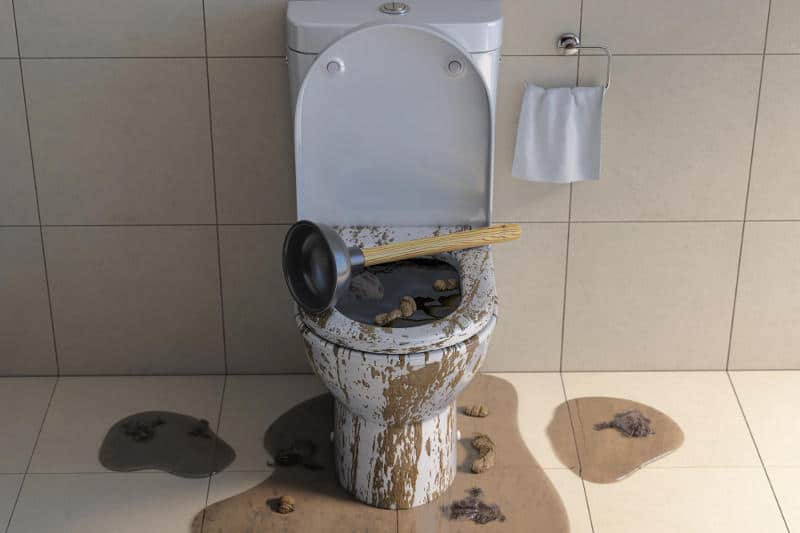
When water starts spilling out of your toilet bowl and your plunger isn’t helping, panic sets in fast. But here’s the thing: your toilet can overflow even without an obvious clog in sight.
In this post, we’ll break down five common causes of mysterious toilet overflows, how to stop them, and what you can do to keep it from happening again.
1. Remote Pipeline Clog
Even if it seems like there’s no blockage, your toilet might still be dealing with a hidden clog deeper down the pipeline. These types of clogs don’t always show up near the bowl, but they can still cause an overflow.
Common culprits include:
- Too much toilet paper
- Baby wipes or makeup wipes (even the “flushable” kind)
- Paper towels
- Feminine hygiene products
- Cotton balls and swabs
- Hair
- Food scraps and cooking grease
Even a partial blockage can slow drainage just enough to trigger an overflow, especially in older or low-flow toilets that lack strong flushing power.
Pro tip: If your toilet often struggles, try flushing twice for larger loads — once for waste, once for paper. It’s not glamorous, but it can save you from a messy surprise.
2. Blocked Plumbing Vent
Your toilet’s flush relies on more than just water — it also needs air. That’s where your plumbing vent comes in. This pipe, usually routed through your roof or an exterior wall, allows fresh air into your plumbing system to balance pressure and keep things flowing smoothly.
But when that vent gets blocked — say by leaves, bird nests, or other debris — it disrupts airflow. The result? Your toilet may start gurgling, draining slowly, or even overflowing, despite no visible clog.
Other red flags include:
- Bubbling or splashing sounds after flushing
- Foul sewer odors coming from the toilet
- Water backing up into nearby fixtures
Without proper airflow, the system can create negative pressure (suction), which might damage your pipes over time.
Tip: If you suspect a vent blockage, don’t try to DIY it from the roof. Call a licensed plumber with the right tools to inspect and clear the vent safely.
3. High Filler Float
Sometimes, the problem isn’t in the pipes — it’s inside the toilet tank itself.
Inside every tank is a filler float (a float cup or float ball), which controls how much water the tank holds. When the float is set too high, the tank overfills and water spills into the overflow tube, eventually leaking out onto the floor.
The good news? This is one of the easiest overflow issues to fix.
Here’s how to adjust the float:
- Take off the tank lid.
- Locate the float (either a cup on the fill valve or a ball on a rod).
- Find the adjustment screw near the top of the fill valve.
- Turn the screw clockwise to lower the water level.
- Flush the toilet and check that the water stops about 1 inch below the top of the overflow tube.
- Repeat as needed until the tank stops filling at the proper level.
Quick tip: While you’re in there, make sure the flapper and chain aren’t tangled or stuck. These can also lead to phantom flushes or slow leaks.
4. Septic Tank Backup
If your home uses a septic system instead of a city sewer, an overflowing toilet could mean your septic tank is full or backing up.
Over time, solid waste builds up in the tank. If it’s not pumped out regularly, the sludge and scum rise too high and start blocking the pipes. When that happens, wastewater has nowhere to go, and it can back up right into your toilet.
Watch for these signs:
- Toilet drains slowly or bubbles when flushed
- Sewage smells around your bathroom or outside
- Water pooling near the septic tank area outside
- Overflowing toilet with no visible clog
How septic systems work (in a nutshell): Wastewater from your home flows into an underground tank. Solids settle at the bottom (sludge), grease and lighter material float to the top (scum), and the cleaner water in the middle flows out to a drain field. But if too much solid waste builds up, it blocks the flow, and things start backing up.
The solution? If you suspect a septic issue, stop using your water immediately and call a septic service pro. Don’t wait — septic backups can damage your plumbing and pose serious health risks.
Pro tip: Avoid flushing grease, coffee grounds, or “flushable” wipes, and schedule professional pumping every 1–3 years depending on usage.
5. Sewer Line Obstruction
If your home isn’t on a septic system, it connects to the municipal sewer line, and that line can clog too.
Tree roots, aging pipes, or a buildup of non-flushable waste can block the line between your home and the city sewer main. When this happens, wastewater has nowhere to go… except back up into your lowest fixtures, usually a basement toilet or shower.
Warning signs of a sewer line clog:
- Multiple drains backing up at once
- Gurgling noises in tubs or sinks when you flush
- Nasty sewer smells coming from drains
- Water backing up into the bathtub or shower when the toilet is flushed
Because sewer water contains dangerous bacteria, any backup is a serious health hazard. Don’t try to DIY this one.
What to do:
- Stop using all water in your home.
- Shut off your main water supply. The valve is usually near your water heater, in the basement, garage, or in a box near the street.
- Call a licensed plumber immediately. They’ll use specialized tools like sewer cameras and motorized augers to locate and clear the blockage, sometimes even from an outdoor cleanout.
Tip to prevent this: Avoid flushing wipes, grease, and hygiene products. If you have large trees near your sewer line, regular inspections can catch root intrusions early.
How to Handle an Overflowing Toilet
When water’s rising fast, you don’t have time to wait and think. Here’s exactly what to do when your toilet starts overflowing.
1. Shut Off the Water Supply
Look for the shut-off valve, a football-shaped knob located on the wall behind or beneath the toilet. Turn it clockwise to stop the flow.
Stuck valve? Remove the tank lid and press down on the flapper (the rubber disc covering the hole at the bottom of the tank) to stop more water from entering the bowl.
If that doesn’t work, shut off the main water supply to your home. It’s often near the water heater, in the basement, or outside by the water meter.
2. Remove Excess Water
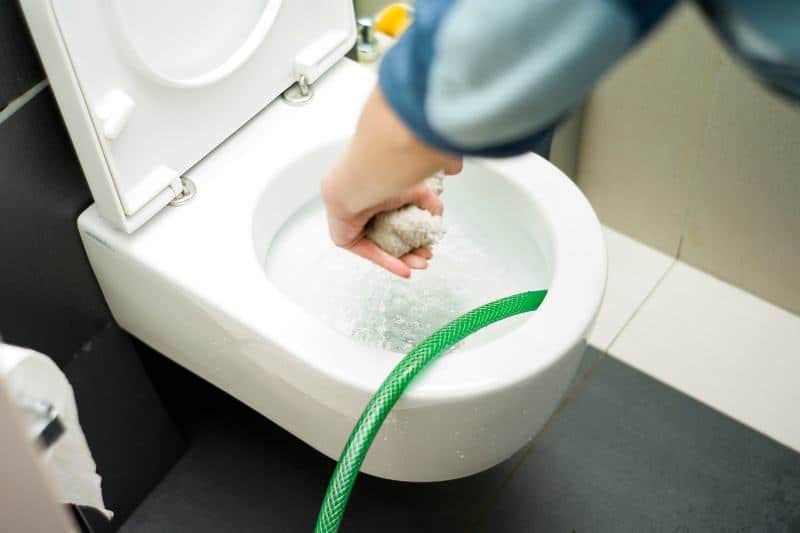
Put on gloves and use a small container to bail water from the bowl into a bucket. If you have a hose and floor drain nearby, that’s even better for faster cleanup. Then, dry the bathroom floor with old towels or a mop to prevent slipping and water damage.
3. Use a Plunger (the Right Kind)
Grab a flange plunger (the kind with the extra inner cup), which seals better in toilet drains.
- Place the flange into the drain hole.
- Pump straight up and down with a firm grip. This pumping forces air and water into the drain, loosening a clog nearest the toilet.
- After 30–60 seconds, see if the water drains.
If it does, turn the water back on and give it a test flush.
4. Try a Plumber’s Snake (If Needed)
If plunging doesn’t work, the clog might be deeper.
- Use a plumber’s snake (also called a toilet auger). It’s a flexible cable inside a rubber hose. It has a crank at one end and a coiled hook at the other.
- Gently feed the cable into the drain until you feel resistance.
- Crank the handle clockwise to break up or hook the clog.
- Pull the snake back out counterclockwise, clean it, and dispose of the debris in a trash bag.
Then try flushing again. If it backs up again, shut off the water and call a plumber — it’s likely a bigger issue.
5. Reset the Tank Mechanism
Before you finish up, make sure the flapper chain isn’t tangled or kinked. Then, adjust the filler float so the water stops about 1 inch below the top of the overflow tube.
6. Disinfect Thoroughly
Any toilet overflow — especially one involving wastewater or sewage — can pose serious health risks. Bacteria, viruses, and other pathogens can linger on bathroom surfaces long after the water is gone.
After cleanup, be sure to:
- Wear rubber gloves and protective footwear
- Use a disinfectant with bleach or antimicrobial properties (check the label)
- Wipe down all affected surfaces: floors, walls, baseboards, and the toilet exterior
- Don’t forget to clean tools (like your plunger or bucket) with hot, soapy water and disinfectant
- Toss contaminated towels, rags, or paper towels in a sealed trash bag
If the overflow involved sewage or you can’t fully sanitize the area, it’s best to call a professional cleanup crew to ensure your home is safe and sanitary.
Tip: When in doubt, treat any toilet overflow like a biohazard.
Final Thoughts
Toilets can overflow even when there’s no visible clog, and it’s usually a sign that something deeper in your plumbing system isn’t working right.
The key in this situation is knowing how to spot the signs and act fast. Even when in doubt, don’t wait. Water damage and sewage backups get worse (and more expensive) the longer they’re left unchecked.
Stay ahead of future problems by watching what you flush, scheduling routine plumbing maintenance, and knowing how to stop a toilet overflow in its tracks.
Stay calm, stay dry — and keep that throne under control.