When choosing rigid foam insulation, EPS (Expanded Polystyrene) and XPS (Extruded Polystyrene) are two of the most common options. While they look similar and are both made from polystyrene, they differ significantly in thermal performance, moisture resistance, cost, and ideal applications.
This guide breaks down the key differences so you can choose the right insulation for your project.
What Is EPS Insulation?
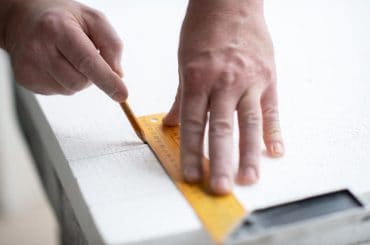
EPS insulation is a rigid foam insulation made by expanding small polystyrene beads using steam. As the beads expand, they fuse together inside a mold, forming lightweight yet durable insulation boards of various densities and thicknesses.
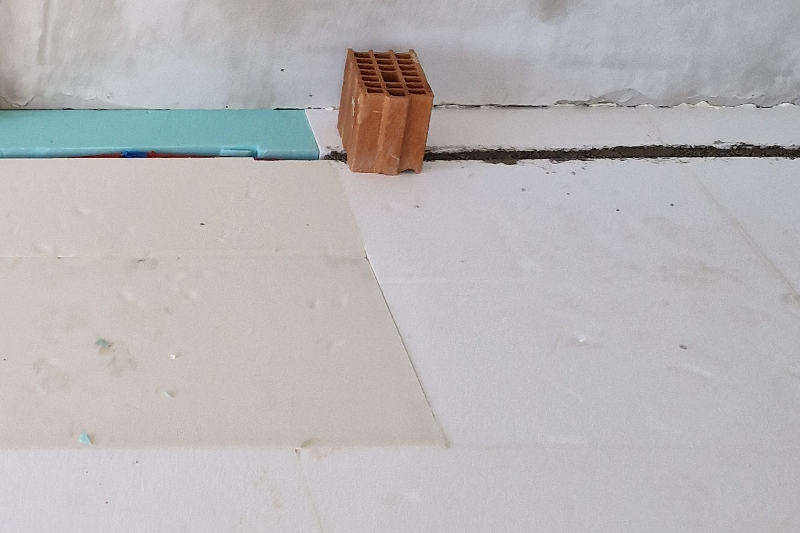
EPS is most commonly white in appearance and has a visible bead structure, which distinguishes it from other rigid foam insulations like XPS.
Because EPS is molded rather than extruded, it can be manufactured in a wide range of strengths and configurations, making it a highly versatile insulation material. It is widely used in residential, commercial, and industrial construction due to its balance of performance, affordability, and long-term reliability.
Key Characteristics of EPS
- R-value: Typically ranges from R-3.6 to R-4.2 per inch, depending on density. While lower than XPS per inch, EPS maintains a stable R-value over time because it uses air (not chemical blowing agents) as its insulating gas.
- Lambda (λ): Approximately 0.036–0.040 W/m·K, depending on density. (Lower lambda values indicate better insulating performance.)
- Water resistance: EPS is vapor permeable, meaning it can absorb some moisture but also allows assemblies to dry. This characteristic makes it well-suited for wall systems designed for moisture management rather than complete vapor blocking.
- Compressive strength: Available in a broad range, usually 10–40 psi, allowing EPS to be engineered for everything from wall sheathing to load-bearing applications like geofoam. Click here for more info on EPS strength.
- Texture: Bead-based and less dense than XPS, contributing to its lighter weight and ease of handling during installation. However, it might crumble while cutting.
Common Applications of EPS Insulation
- Wall sheathing: Used as continuous exterior insulation to reduce thermal bridging and improve energy efficiency.
- Roof insulation: Common in low-slope and commercial roofing assemblies where cost efficiency and long-term performance are important.
- Structural insulated panels: EPS is the most common core material in SIPs due to its dimensional stability and predictable thermal performance.
- Exterior insulation systems: Frequently used in EIFS and other continuous insulation applications above grade.
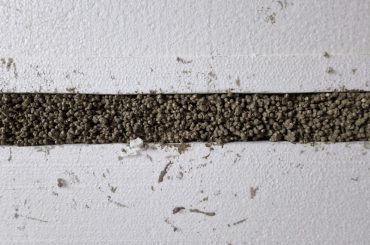
- Lightweight insulating screeds and fills: EPS beads can be mixed with cement to create lightweight, insulating concrete for floor build-ups, covering pipes and cables, and filling deep voids.
- Packaging and geofoam: Beyond buildings, EPS is widely used for protective packaging and large-scale civil engineering projects such as lightweight fill, road stabilization, and landscaping.
What Is XPS Insulation?
XPS insulation is produced by extruding molten polystyrene through a die, creating a continuous, closed-cell foam board. This manufacturing process results in a dense, uniform material with a smooth surface and consistent performance characteristics.
XPS is easily recognizable by its distinctive blue, pink, or green coloring, which varies by manufacturer.
Because of its closed-cell structure, XPS offers excellent resistance to moisture and high compressive strength, making it a popular choice for demanding applications where insulation may be exposed to water, soil pressure, or heavy loads.
Key Characteristics of XPS
- R-value: Approximately R-5 per inch, providing higher initial thermal resistance compared to most other rigid foam insulation types.
- Lambda (λ): Approximately 0.029–0.034 W/m·K. Lower lambda values indicate better insulating performance, which explains XPS’s higher starting R-value per inch.
- Water resistance: Very high, as the closed-cell structure significantly limits water absorption. This makes XPS well-suited for environments with prolonged moisture exposure.
- Compressive strength: Typically ranges from 15–60 psi, allowing XPS to perform well in load-bearing and below-grade applications.
- Texture: Smooth, dense, and closed-cell, which contributes to its durability and ease of cutting and installation.
Common Uses of XPS Insulation
- Foundation walls: Frequently used on the exterior of foundation walls to provide continuous insulation and protect against moisture intrusion.
- Below-grade applications: Ideal for applications in direct contact with soil, where moisture resistance and strength are critical.
- Basements: Used on interior or exterior basement walls to improve comfort and reduce heat loss.
- Under concrete slabs: Installed beneath slabs to minimize heat loss and withstand the weight of the structure above.
- Inverted or protected roof assemblies: Common in roof systems where insulation is placed above the waterproofing membrane and exposed to moisture and foot traffic.
XPS vs EPS: Side-by-Side Comparison
| Feature | EPS | XPS |
| R-Value per inch | ~3.6–4.2 | ~5.0 |
| λ-Value (W/m·K) | 0.036–0.040 | 0.029–0.034 |
| Moisture Resistance | Good | Excellent |
| Vapor Permeability | Higher | Very low |
| Compressive Strength | Variable | Higher |
| Long-Term R-Value | Stable | Can decline over time |
| Cost | More affordable | More expensive |
| Environmental Impact | Lower | Higher |
Moisture Performance and Drying Potential
Moisture management is one of the most important factors when selecting rigid foam insulation, and this is where XPS and EPS differ most noticeably.
- XPS resists water absorption extremely well due to its closed-cell structure. This makes it especially well-suited for below-grade applications, such as foundation walls and under-slab insulation, where prolonged exposure to moisture is expected. Even in damp or saturated conditions, XPS maintains much of its insulating ability and structural integrity.
- EPS can absorb a limited amount of moisture, but it also dries more readily than XPS and allows water vapor to pass through. This vapor permeability can be an advantage in above-grade wall assemblies designed to manage and release moisture rather than trap it. When properly detailed, EPS supports drying potential and reduces the risk of moisture being locked inside wall systems.
Durability and Long-Term Performance
While XPS offers a higher initial R-value, its thermal performance can decline over time as the chemical blowing agents used in manufacturing slowly diffuse out of the foam and are replaced by air. This process, often referred to as thermal drift, can reduce real-world performance over the life of the building.
EPS, by contrast, uses air as its insulating gas from the start. As a result, its R-value remains stable and predictable for decades, making long-term performance easier to model and rely on. Additionally, EPS has excellent dimensional stability and does not significantly shrink or degrade when properly installed.
Environmental Impact
EPS is widely considered the more environmentally responsible option among rigid foam insulations.
EPS advantages include lower global warming potential due to the absence of high-impact blowing agents, use of air as the insulating medium, a simpler recycling process and broader acceptance in recycling programs
XPS has traditionally relied on blowing agents with a higher environmental impact, contributing to a larger carbon footprint. While many manufacturers are transitioning to lower-impact or next-generation blowing agents, XPS generally still carries a higher embodied environmental cost compared to EPS.
Cost Differences
EPS offers a lower upfront cost and provides excellent insulation value per dollar spent. Its affordability, combined with long-term R-value stability, makes it a popular choice for large-scale and budget-conscious projects.
XPS typically costs more per board foot. The higher price is often justified in applications where superior moisture resistance, higher compressive strength, or below-grade durability are required.
How to Choose Between EPS and XPS
Both XPS and EPS are effective insulation materials, but the best choice depends on the specific conditions of your project, including moisture exposure, structural demands, budget, and long-term performance goals.
Choose XPS if:
- You need insulation below ground, such as foundation walls or under-slab applications
- High compressive strength is required to support loads or resist soil pressure
- The insulation will be exposed to prolonged or continuous moisture
Choose EPS if:
- You want a cost-effective insulation solution with strong overall value
- Long-term thermal stability is important, with minimal performance change over time
- Environmental impact and sustainability are a priority
- You’re insulating walls or roofs above grade where vapor permeability and drying potential are beneficial
Common XPS and EPS Insulation Brands
The following brand names and product lines are examples only. Actual availability, product specifications, and naming conventions vary by region and market.
Popular EPS Insulation Brands & Products
- Owens Corning FOAMULAR EPS – Used in wall and roofing applications; known for consistent R-values and reliable long-term performance.
- Atlas Roofing EPS – Commonly specified for exterior insulation, wall sheathing, and roofing assemblies.
- ACH Foam Technologies EPS – Offers a wide range of EPS densities for wall, roof, and structural uses.
Popular XPS Insulation Brands & Products
- Owens Corning FOAMULAR XPS – One of the most widely recognized XPS insulation lines, valued for moisture resistance and compressive strength.
- Atlas Roofing RoofBoard XPS – Designed primarily for roofing and above-grade insulation systems.
- Dow STYROFOAM Brand XPS – Commonly used in foundations, slabs, and below-grade applications; now manufactured under various licensing and ownership arrangements.
- Kingspan GreenGuard XPS – High-performance XPS boards used in commercial, below-grade, and specialty applications.
Where to Buy
XPS and EPS insulation boards are widely available through building material suppliers, insulation distributors, and home improvement retailers, both in-store and online.
- North America: Commonly stocked at Home Depot, Lowe’s, local insulation distributors, and select online retailers.
- Europe: Large DIY and building supply stores such as Hornbach, Bauhaus, OBI, as well as regional insulation suppliers.
Final Thoughts
Choosing between EPS and XPS isn’t about which insulation is “better” overall, but about how the material behaves over the life of the building. Factors like moisture exposure, drying potential, and long-term thermal stability often matter more than initial R-value alone.
Projects that demand strength and water resistance may justify XPS, while many above-grade assemblies benefit from EPS’s stability, vapor permeability, and lower environmental footprint. In practice, the best-performing buildings often use both materials strategically, placing each where its strengths make the most sense.
A well-informed choice considers not just insulation values on paper, but how the material will perform years after installation, under real-world conditions.