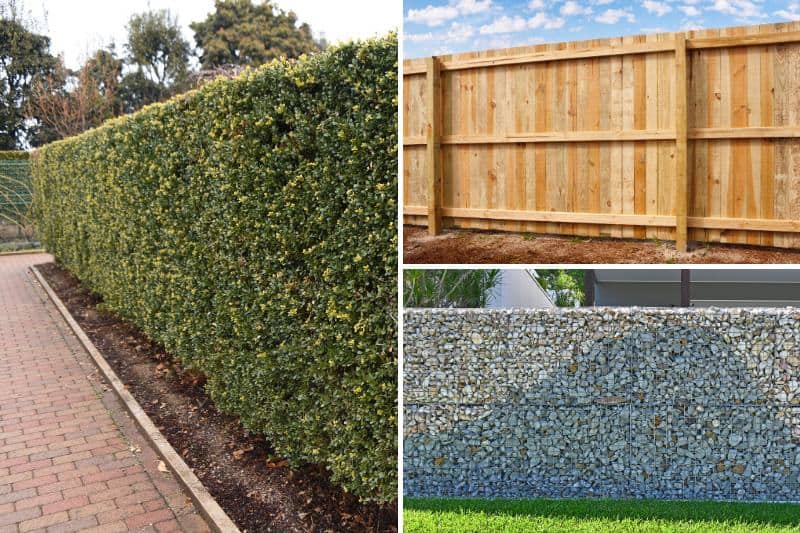
Outdoor noise — from busy roads, nearby construction, barking dogs, or loud neighbors — can seriously impact comfort, sleep, and overall quality of life.
While you can’t fully soundproof an outdoor space, outdoor sound barriers can significantly reduce unwanted noise by blocking, absorbing, and deflecting sound before it reaches your home or yard.
This guide explains how outdoor sound barriers work, the best types available, and how to choose the right solution for noise from traffic, neighbors, or other external sources.
1. Solid Fence Sound Barriers
Best for: Noisy neighbors, nearby yards, moderate traffic noise
Solid fence sound barriers are one of the most common and effective ways to reduce outdoor noise when they are built correctly. Their effectiveness comes from density and tight construction.
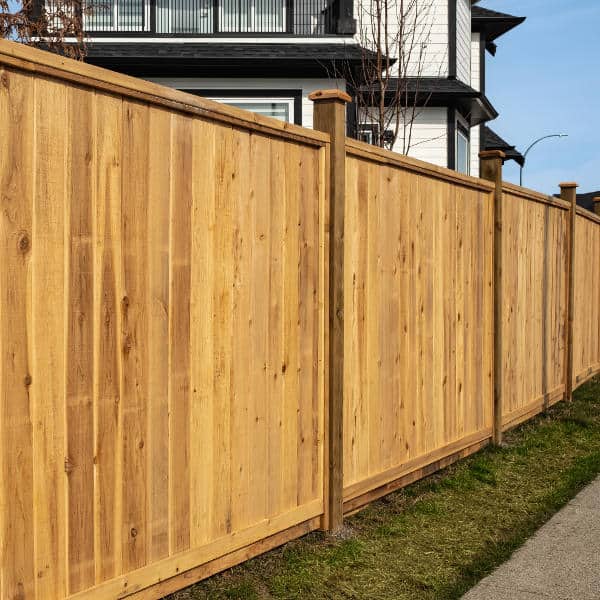
A solid fence works by blocking the direct path of sound between the noise source and your property, forcing sound waves to travel over or around the barrier, which significantly reduces their intensity. Even small gaps between panels, boards, or posts can allow sound to leak through, so careful construction is essential.
The most effective solid fences are made from materials that provide both mass and minimal openings:
- Wood fences built with tongue-and-groove or board-on-board designs perform well because they eliminate gaps that are common in standard fencing.
- Vinyl privacy fencing and composite fencing are also strong options, as they are manufactured as continuous panels with consistent density.
- Concrete and masonry walls offer the highest level of sound blocking due to their weight and solidity, making them particularly effective in high-noise environments.
When properly installed, solid fences are highly effective at blocking mid- and high-frequency noise such as voices, music, barking dogs, and general neighborhood activity. In addition to reducing noise, they also function as privacy fences and are typically durable and weather-resistant, making them a long-term outdoor solution.
However, solid fence sound barriers do have limitations. Local zoning or HOA regulations may limit fence height, which can restrict how much noise reduction is achievable.
Performance can be greatly improved by enhancing a solid fence with materials like mass-loaded vinyl (MLV) or exterior acoustic panels. These additions increase sound absorption and overall effectiveness, especially in areas exposed to persistent or louder noise sources.
2. Outdoor Soundproofing Panels & Sound Walls
Best for: Traffic noise, constant outdoor noise, patios, and decks
Outdoor soundproofing panels are designed primarily to block sound, not absorb it (unlike indoor acoustic panels). In outdoor environments, true sound absorption is far less effective than indoors because sound energy quickly escapes into open space. Instead, outdoor soundproofing panels rely on mass, density, and airtight construction to stop noise from traveling directly toward living areas.
These panels are typically built with dense cores — such as composite materials or mass-loaded layers — that prevent sound waves from passing through. When installed as a continuous barrier, they interrupt the direct line of sight between the noise source and the listener, which is the most effective way to reduce outdoor noise.
Outdoor soundproofing panels are engineered for exterior conditions and use weather-resistant materials that can withstand rain, wind, UV exposure, and temperature changes. While large sound walls are commonly used along highways and commercial properties, residential-scale soundproofing panels are now available for backyards, patios, and property lines.
For best results, these panels must face the noise source directly and be installed with no gaps at the base or between panels. They are often paired with solid fences or walls to increase overall mass and improve noise reduction. While some systems may include a thin absorptive surface to reduce minor reflections, their primary function remains sound blocking.
Outdoor soundproofing panels require careful placement and are generally more expensive than standard fencing. But, when installed correctly, they are one of the most effective solutions for reducing traffic noise and other constant outdoor sound sources.
3. Earth Berms and Landscape Sound Barriers
Best for: Traffic noise, large properties
Earth berms and landscape sound barriers reduce noise by using mass and elevation to block sound naturally. An earth berm is a raised mound of soil positioned between a noise source and the area you want to protect. Because soil is dense and thick, berms are especially effective at reducing low-frequency noise, such as the constant rumble produced by traffic or heavy machinery.

When designed correctly, earth berms can provide a high level of noise reduction while blending seamlessly into the surrounding landscape. They are often combined with solid fencing, retaining walls, or dense vegetation to improve both acoustic performance and visual appeal.
The added height from a berm helps break the line of sight between the noise source and the listener, which is critical for effective sound reduction.
One of the main advantages of earth berms is their durability. Once constructed, they require very little maintenance and can last for decades. However, they do require a significant amount of space and a higher upfront investment for excavation and landscaping. For properties with enough room, earth berms offer one of the most effective and natural-looking solutions for controlling outdoor noise, particularly from busy roads or highways.
4. Vegetation and Green Barriers (Trees & Hedges)
Best for: Mild noise reduction, visual screening
Vegetation and green barriers can help reduce outdoor noise, though they are most effective when used as a supplement rather than a standalone soundproofing solution. Plants do not block sound in the same way as solid barriers, but dense foliage can scatter and soften high-frequency noise while also masking unwanted sounds with natural ambient noise, such as rustling leaves.
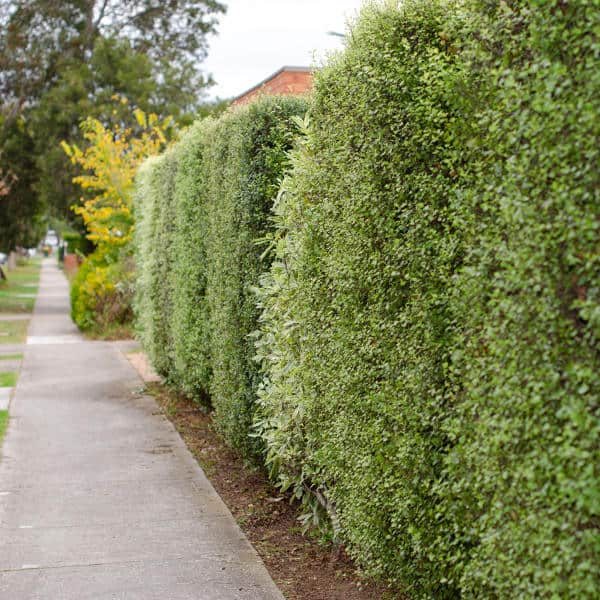
Evergreen hedges, clumping bamboo, and thick shrubs work best because they maintain dense coverage year-round and create a continuous visual and acoustic buffer. When combined with solid fencing, vegetation can improve overall noise reduction by reducing sound reflections and making noise feel less intrusive.
Green barriers are especially useful along property lines, patios, and garden spaces where visual privacy is just as important as sound control.
The main advantages of vegetation-based barriers are their aesthetic and environmental benefits. They enhance landscaping, improve privacy, and contribute positively to the surrounding ecosystem.
However, on their own, they provide limited noise reduction and require time to grow and mature. For best results, vegetation is most effective when paired with solid fences, walls, or acoustic panels as part of a layered noise-reduction approach.
5. Temporary & Portable Outdoor Sound Barriers
Best for: Temporary noise issues, renters, events
Temporary and portable outdoor sound barriers are designed to reduce noise on a short-term basis without requiring permanent installation. These barriers typically use absorptive panels, sound blankets, or heavy acoustic curtains to help dampen noise and reduce reflections. They are commonly used at construction sites, outdoor events, or in residential situations where permanent structures are not allowed or practical.

- 1.Sound barrier is mostly used in construction site, to...
- 2.Our sound barrier used MLV and soundproof cotton to...
- 3.Industrial temporary Sound barrier fencing can be...
- 4.Features : waterproof, flame-retardant, soundproof...
Because they are lighter and movable, portable sound barriers offer flexibility that permanent solutions cannot. They can be repositioned as needed, stored when not in use, and deployed only during noisy periods. This makes them especially useful for renters, homeowners dealing with temporary construction noise, or anyone hosting outdoor gatherings who wants to limit sound spread.
However, portable barriers are generally less effective than permanent sound walls or solid fences. Their performance is limited by size, weight, and weather exposure, and they tend to be less durable over time.
While they won’t provide the same level of noise reduction as permanent installations, temporary and portable sound barriers can still offer noticeable improvements for short-term or situational noise problems.
Tailored Solutions: Traffic Noise vs. Neighbor Noise
Now that you understand the main types of outdoor sound barriers, it’s helpful to look at targeted solutions for the two most common sources of outdoor noise: traffic and neighbors. Each presents different challenges and requires a slightly different approach.
Reducing Traffic Noise
Traffic noise is dominated by low frequencies and a steady, continuous rumble, which makes it more difficult to control than other types of outdoor noise. Low-frequency sound waves are powerful and tend to travel long distances, easily bending around obstacles that are not tall or dense enough. For this reason, traffic noise reduction requires barriers that provide significant mass and height.
Earth berms combined with solid walls are among the most effective solutions for traffic noise, as the thick soil mass blocks and weakens low-frequency sound energy. For best results, barriers should be placed as close to the road or noise source as possible, which helps intercept sound before it spreads.
Reducing Neighbor Noise
Neighbor noise usually consists of mid- and high-frequency sounds such as voices, music, and general social activity. These frequencies are easier to block than traffic noise and respond well to solid, gap-free barriers that interrupt the direct line of sound between properties.
A tall, tightly constructed solid fence is often the most effective starting point for reducing neighbor noise. Performance can be further improved by adding sound-damping or soundproofing panels to the fence, which help limit sound reflections between properties. Dense vegetation can also be incorporated to improve visual privacy and provide light sound masking, making noise feel less intrusive.
An effective setup for neighbor noise is a solid timber fence paired with soundproofing panels and an evergreen hedge. This layered approach blocks direct noise, reduces reflected sound, and enhances both privacy and visual appeal.
Installation & Placement Tips
Proper installation and placement are just as important as the type of sound barrier you choose.
Height plays a major role in noise reduction, as taller barriers are able to block more sound, particularly traffic noise that tends to travel in a straight line before spreading. In many cases, increasing barrier height delivers a noticeable improvement in performance.
Equally important is eliminating gaps. Even small openings at the base of a fence, between panels, or around posts can allow sound to pass through or around the barrier, significantly reducing its effectiveness. A continuous, tightly sealed structure is essential for meaningful noise control.
Placement also matters. Sound barriers work best when positioned as close to the noise source as possible, whether that is a road, neighboring yard, or mechanical equipment. Intercepting sound early prevents it from spreading and wrapping around the barrier.
Finally, aesthetics and airflow should be considered alongside performance. Combining sound barriers with plants, hedges, or trellises can soften their appearance, improve visual appeal, and help the barrier blend naturally into the surrounding landscape without compromising effectiveness.
Final Thoughts & Practical Tips
Outdoor sound barriers won’t make your yard or home completely silent, but when designed and installed correctly, they can dramatically reduce unwanted noise and restore privacy. The most effective solutions focus on stopping sound before it spreads by breaking the direct path between the noise source and your living space.
For the best results, always match the barrier type to the noise source. In many cases, combining multiple elements delivers better results than relying on a single solution.
Here are some final tips for success:
- Prioritize height and mass: Taller, denser barriers block more sound than lightweight or low structures.
- Eliminate gaps: Seal openings at the base, between panels, and around posts to prevent sound leakage.
- Place barriers close to the source: Intercepting sound early improves overall noise reduction.
- Match the solution to the noise type: Use heavy barriers for traffic noise and solid, continuous fencing for neighbor noise.
- Combine solutions when possible: Layering barriers often delivers better results than a single approach.
- Balance performance with appearance: Use plants, hedges, or trellises to soften the look without reducing effectiveness.
- Set realistic expectations: Outdoor sound barriers reduce noise but won’t eliminate it entirely.