Acoustic panels are essential for improving sound quality in homes, studios, offices, and commercial spaces. They reduce echo, control reverberation, and make rooms sound clearer and more comfortable.
However, not all acoustic panels are the same — each type serves a different purpose and aesthetic.
Below is a detailed guide to the best types of acoustic panels, including wood-slat, foam, fabric-wrapped, and other popular options, to help you choose the right solution for your space.
Wood Slat Acoustic Panels
Best for: Modern interiors, living rooms, offices, restaurants, and stylish studios
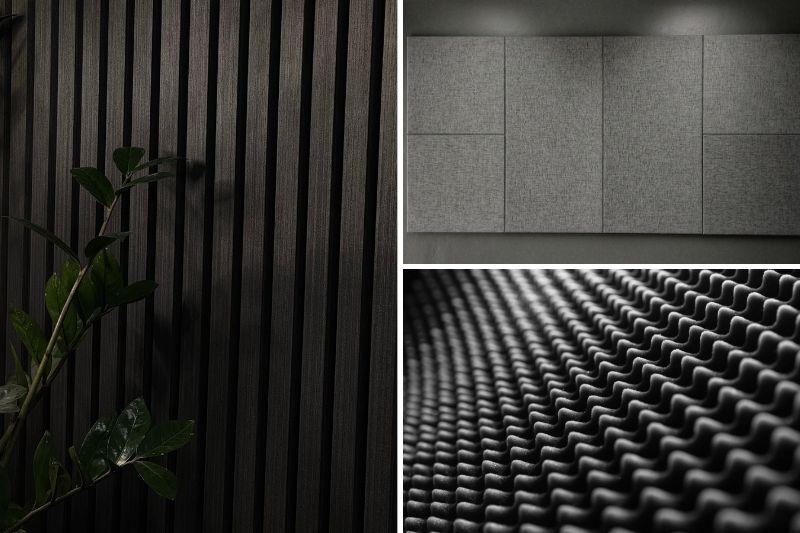
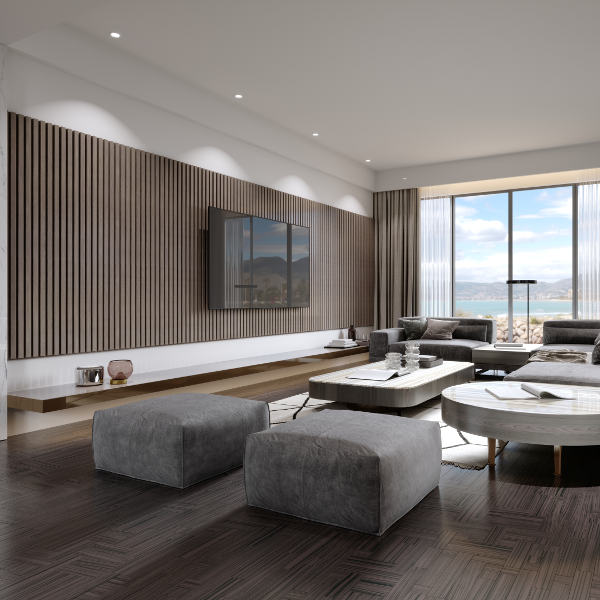
Wood slat acoustic panels are a premium sound treatment solution that seamlessly blends acoustic performance with architectural design.
These panels typically consist of evenly spaced wooden slats (often made from MDF, oak veneer, walnut, or other hardwood finishes) mounted on top of an acoustic felt or mineral-fiber backing. The felt absorbs sound energy while the slats help diffuse reflections, creating a more balanced and natural sound environment.
Unlike traditional acoustic panels that are designed to be hidden, wood slat panels are meant to be seen and celebrated. They function as both a sound treatment and a design feature, making them especially popular in high-end residential and commercial spaces.
Acoustic Performance
Wood slat panels are particularly effective at controlling mid to high-frequency reflections, which are responsible for echo, harshness, and poor speech clarity.
While the wooden slats themselves are reflective, the spacing between them allows sound waves to pass through and be absorbed by the backing material. This hybrid absorption-and-diffusion effect helps create a more comfortable and acoustically balanced room.
For improved low-frequency performance, wood slat panels can be paired with thicker acoustic backing or mineral wool insulation, or combined with bass traps elsewhere in the room.
Installation
Wood slat acoustic panels are typically installed directly onto walls or ceilings using screws, mounting rails, or construction adhesive, depending on the panel design. While many systems are DIY-friendly, larger installations or feature walls may benefit from professional installation to ensure proper alignment and optimal acoustic performance.
Pros
- Excellent balance of visual appeal and sound absorption
- Improves speech intelligibility and listening comfort
- Adds warmth, depth, and texture to walls or ceilings
- Available in many finishes, colors, and slat widths
- Highly durable and suitable for long-term installations
Cons
- Higher cost compared to foam or basic fabric panels
- Installation may require more planning or professional help
- Less effective for deep bass frequencies on their own
Ideal Use Case
If you want a room that sounds controlled, professional, and refined — without sacrificing interior design — wood slat acoustic panels are one of the best high-end acoustic solutions available.
Product Recommendation
NeatiEase Wood Panels for Walls are a practical option for both residential and commercial spaces. They are available in five different colors, making them easy to integrate into a wide range of interiors. The panels are simple to install using screws or strong adhesive and are made from MDF and high-density polyester fiber, making them non-toxic, environmentally friendly, and durable.

- Modern and Elegant Design - The wood slat wall panels...
- Easy to Install - The package includes four 96" x...
- High Quality Soundproof Wood Wall Panels - The wall...
- Multifunctional Wall Panels - As a acoustic wall panels...
Foam Acoustic Panels
Best for: Home studios, podcast rooms, gaming setups, and practice spaces
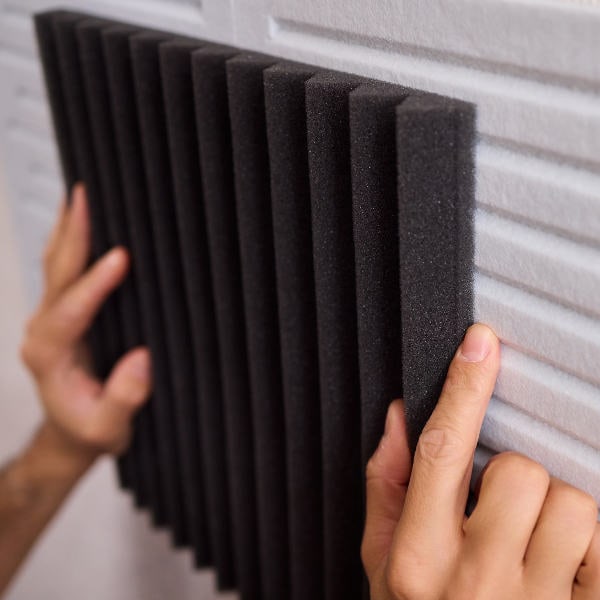
Foam acoustic panels are one of the most widely recognized sound treatment options and are often the first choice for beginners.
Made from open-cell polyurethane foam, these panels are designed to absorb sound waves by converting acoustic energy into small amounts of heat as sound passes through the porous material.
They are commonly shaped into wedges, pyramids, or egg-carton patterns, which increase surface area and improve absorption efficiency — particularly for higher frequencies.
Acoustic Performance
Foam panels are most effective at reducing flutter echo, slapback echo, and harsh high-frequency reflections.
They work best in small to medium-sized rooms where reflections bounce rapidly between parallel surfaces. However, due to their lightweight construction, foam panels have limited effectiveness in controlling low-frequency bass, which often requires thicker, denser materials.
Installation
Foam acoustic panels are lightweight and easy to install using adhesive tabs, double-sided tape, or spray adhesive. They can be mounted directly to walls or ceilings, making them ideal for renters or temporary setups, though care should be taken to avoid surface damage when removing them.
Pros
- Very affordable and accessible
- Lightweight and easy to mount with adhesive or strips
- Ideal for quick acoustic improvements
- Available in many shapes, colors, and sizes
- Effective for speech clarity and vocal recordings
Cons
- Minimal low-frequency absorption
- Can look utilitarian or overly “studio-like”
- Degrades faster than wood or fabric panels
- Not always fire-rated unless specifically certified
Ideal Use Case
Foam acoustic panels are perfect for entry-level sound treatment, temporary setups, or spaces where budget and simplicity matter more than aesthetics. They are especially useful for podcasters, streamers, gamers, and hobbyist musicians looking for a cost-effective improvement in sound clarity.
Product Recommendation
Fstop Labs Acoustic Foam Panels are a solid entry-level option. At 2 inches thick, they provide reliable high-frequency absorption while maintaining a clean appearance. The panels are well-made, expand quickly after unpacking, and offer good performance for home studios and recording spaces.
- 3D ACOUSTIC DESIGN: Our 2 inches foam provides moderate...
- ENVIRONMENTAL PROTECTION: Made up of environmentally...
- QUICKLY RECOVER TO NORMAL SIZE: Open the Vacuum...
- WIDE USE: Great for spot treating sound on walls in...
Fabric-Wrapped Acoustic Panels
Best for: Offices, conference rooms, classrooms, home theaters
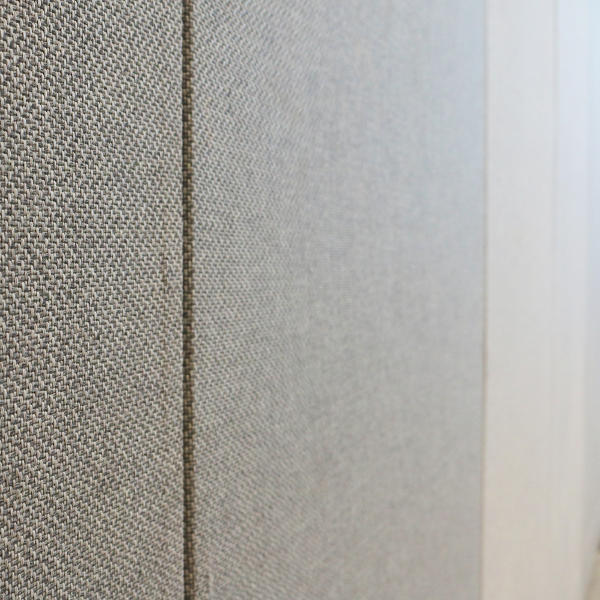
Fabric-wrapped acoustic panels are one of the most effective and versatile sound treatment solutions available. These panels are constructed with a dense sound-absorbing core (typically fiberglass or mineral wool) encased in an acoustically transparent fabric that allows sound waves to pass through and be absorbed efficiently.
Because of their clean appearance and strong acoustic performance, fabric-wrapped panels are widely used in both commercial and residential environments. They are designed to reduce echo, control reverberation, and significantly improve speech intelligibility without overwhelming the visual design of a room.
One of the biggest advantages of fabric-wrapped panels is their customizability. They are available in a wide range of colors, fabric textures, sizes, thicknesses, and mounting options (wall-mounted, ceiling-mounted, or suspended)
This makes them easy to integrate into existing interior designs or branding schemes without drawing unwanted attention.
Acoustic Performance
Fabric-wrapped panels provide excellent absorption across mid and high frequencies, which are critical for controlling echo, excessive reverberation, and background noise. Thicker panels (2–4 inches or more) can also offer moderate low-frequency absorption, making them more acoustically effective than foam in many applications.
Their dense core allows them to outperform lightweight solutions, especially in speech-focused spaces, home theaters, meeting and presentation rooms, and open-plan offices.
Installation
Fabric-wrapped acoustic panels are typically installed using mounting brackets, impaling clips, or Z-clips to ensure a secure and flush fit. Due to their weight and size, careful placement and proper mounting are important for both safety and optimal acoustic performance.
Pros
- Strong, reliable absorption across mid and high frequencies
- More effective than foam for overall room treatment
- Highly customizable for visual consistency
- Clean, professional, and unobtrusive appearance
- Greater durability and longevity than foam panels
Cons
- Higher upfront cost compared to foam
- Heavier and requires secure mounting
- Performance depends on proper placement and spacing
Ideal Use Case
Fabric-wrapped acoustic panels are ideal when sound control, comfort, and visual harmony are all priorities. They are especially well-suited for professional environments and home theaters where performance and aesthetics must work together.
Product Recommendation
ATS Acoustics Sound Absorbing Acoustic Panels are a reliable option for both commercial and residential use. They are available in 16 different colors, feature a high NRC rating of 1.0 for excellent sound absorption, and include mounting hardware for straightforward installation.

- Panel size is 24" x 48" x 2" and mounts flush to wall
- Fire Rated Class 1 or Class A per ASTM E84, has a Noise...
- Solid wood internal frame provides high durability...
- Wrapped in ATS Acoustics high-performance Sona fabric.
Polyester (PET) Acoustic Panels
Best for: Eco-conscious spaces, schools, offices, and public buildings
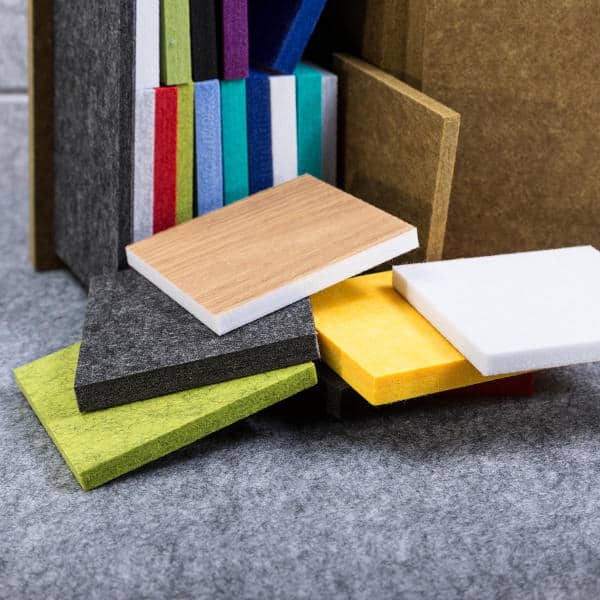
Polyester (PET) acoustic panels are a modern, sustainable alternative to traditional acoustic treatments. Manufactured from recycled plastic bottles, these panels are engineered to provide effective sound absorption while supporting environmental responsibility and durability.
They are moisture-resistant, easy to clean, non-toxic and often fire-rated. These qualities make them well-suited for schools, healthcare facilities, and public buildings where safety and longevity are critical.
PET panels are available in a wide range of bold and neutral colors, custom shapes and patterns, flat panels, baffles, or sculptural designs. This allows designers to use them as both acoustic treatments and visual elements, adding color and interest to modern interiors.
Acoustic Performance
PET panels offer solid absorption in the mid- to high-frequency range, helping to reduce reverberation, echo, and general noise buildup. While they may not absorb sound as deeply as thick fabric-wrapped panels, they provide consistent performance for everyday acoustic needs.
Installation
PET acoustic panels are lightweight and easy to install using adhesive, clips, or mounting rails, depending on the application. Their low weight makes them suitable for walls and ceilings, and many systems are DIY-friendly while still meeting commercial installation requirements.
Pros
- Made from recycled, eco-friendly materials
- Durable and resistant to wear and moisture
- Safe for public and high-traffic spaces
- Wide variety of colors and design options
- Lightweight and easy to install
Cons
- Less natural or warm appearance than wood
- Slightly less absorption than thick fabric panels
- Limited low-frequency performance without added thickness
Ideal Use Case
PET acoustic panels are a great choice for modern, sustainable interiors that need dependable acoustic treatment with minimal maintenance. They are especially effective in spaces where durability, safety, and environmental impact are top priorities.
Product Recommendation
TroyStudio Acoustic Panels are a practical PET panel option available in white, black, or silver. Crafted from 100% polyester fiber, they are non-toxic, odorless, and designed to maintain vivid color without fading, making them suitable for long-term use in both residential and commercial spaces.
- 【SPECIFICATION】: Size - 12 x 12 x 0.32 inches, pack...
- 【ENHANCED ACOUSTICS】: Elevate your sound experience...
- 【ELEGANT DECOR & COLLISION PROTECTION】: Unlike...
- 【ECO-FRIENDLY & ENDLESS APPLICATIONS】: Our...
Bass Traps (Low-Frequency Panels)
Best for: Recording studios, home theaters, music production rooms
Bass traps are specialized acoustic panels designed specifically to absorb low-frequency sound energy, commonly referred to as bass.
Low frequencies are the most difficult sound waves to control because they are longer, more powerful, and tend to accumulate in room corners and along wall junctions. Standard acoustic panels often struggle to address these frequencies effectively, which is where bass traps become essential.

Acoustic Performance
Bass traps work by using thick, dense materials (such as mineral wool or fiberglass) to absorb low-frequency energy before it reflects back into the room. This results in tighter bass response, clearer mids, and more accurate overall sound.
Strategic placement is critical for bass traps to be effective. They are most commonly installed in vertical room corners, wall-to-ceiling junctions, and behind speakers or listening positions.
When combined with wall-mounted panels and ceiling clouds, bass traps help create a balanced and controlled acoustic environment, especially in smaller rooms where bass issues are more pronounced.
Installation
Bass traps are typically mounted in corners using brackets, corner straddling, or freestanding placement depending on the design. Due to their size and weight, proper positioning and secure mounting are important to achieve optimal performance and maintain a clean, professional appearance.
Pros
- Essential for controlling bass buildup and resonance
- Dramatically improves sound accuracy and clarity
- Enhances the effectiveness of other acoustic panels
- Crucial for mixing, mastering, and critical listening
- Reduces listening fatigue over long sessions
Cons
- Bulkier and thicker than standard acoustic panels
- Requires careful placement for optimal results
- Can be visually dominant if not integrated into the design
Ideal Use Case
Bass traps are absolutely necessary in any space dedicated to music production, recording, home theater, or critical listening. Without them, even the best speakers and panels cannot deliver accurate sound.
Product Recommendation
Auralex LENRD Studiofoam Bass Traps are a popular and effective option for corner bass control. Available in charcoal, burgundy, and purple, they offer reliable low-frequency absorption and are well-suited for home studios and listening rooms.

- LENRD stands for Low-End Node Reduction Device
- Helps to Control the Low Frequency Response Of Your...
- Designed for corner mounting between walls and...
- Each LENRD is 12" x 12" x 24" (2 Linear Feet of...
How to Choose the Right Type of Acoustic Panels
Now that you understand the basics of each acoustic panel type, the next step is choosing the right solution for your specific needs. The best results come from matching the panel type to your acoustic goals, room size, and overall design preferences rather than relying on a one-size-fits-all approach.
Follow these steps to make an informed decision:
1. Define Your Purpose
Start by identifying what you want to improve acoustically:
- Speech clarity: Offices, classrooms, and conference rooms benefit most from fabric-wrapped or PET panels, which reduce echo and improve intelligibility.
- Music recording or mixing: Requires a combination of wall-mounted acoustic panels and bass traps to control both reflections and low-frequency buildup.
- General noise reduction: Foam or PET panels are often sufficient for reducing echo and overall noise in casual or shared spaces.
- Home theater immersion: Fabric-wrapped panels combined with bass traps provide balanced sound control and an immersive listening experience.
2. Consider Room Size and Shape
Room dimensions and layout have a significant impact on acoustic behavior:
- Small rooms often suffer from bass buildup and uneven frequency response, making bass traps especially important.
- Large rooms typically require thicker panels or a greater number of panels to achieve effective sound absorption.
- Parallel walls increase echo and flutter, requiring reflection control at key points.
Irregularly shaped rooms tend to perform better acoustically, but they still benefit from targeted acoustic treatment.
3. Balance Aesthetics with Performance
Modern acoustic panels don’t have to look industrial or intrusive:
- Wood slat panels provide a premium, architectural appearance.
- Fabric-wrapped panels blend seamlessly into both residential and professional interiors.
- PET panels offer modern color options and design flexibility.
- Foam panels focus on function and affordability over visual appeal.
Choose panels that complement your space while still delivering the acoustic performance you need.
4. Set a Realistic Budget
Your budget will influence both the type of panels you choose and how much coverage you can install:
- Foam panels: The most affordable, entry-level option.
- PET panels: Mid-range pricing with durability and eco-friendly benefits.
- Fabric-wrapped panels: Higher performance with extensive customization options.
- Wood slat panels: Premium pricing paired with high-end aesthetics.
- Bass traps: A critical investment for accurate sound, especially in music-focused spaces.
In many cases, the most effective solution is a hybrid approach, combining different panel types to maximize acoustic performance while staying within budget.
Acoustic Panel Comparison Table
| Panel Type | Best For | Acoustic Strength | Aesthetic Appeal | Install. Difficulty | Cost Range |
| Wood Slat Panels | Living rooms, offices, restaurants, design-forward studios | Mid–high frequencies (can assist bass with backing) | Premium | Medium | $$$ |
| Foam Panels | Home studios, podcasts, gaming rooms | High frequencies only | Functional | Easy | $ |
| Fabric-Wrapped Panels | Offices, classrooms, home theaters | Mid–high (some low with thickness) | Professional | Medium | $$–$$$ |
| PET Panels | Schools, offices, public spaces | Mid–high frequencies | Modern | Easy | $$ |
| Bass Traps | Studios, home theaters, critical listening | Low frequencies (bass control) | Utility-focused | Medium | $$–$$$ |
Final Thoughts & Tips
Hopefully, this article has helped you better understand acoustic panels and find the right solution for your space. Remember, every room behaves differently, and effective sound treatment works best when performance, placement, and aesthetics are considered together.
To help you even further, here are some final tips to ensure the best results:
- Think in systems, not single panels: The most effective acoustic setups combine multiple panel types. For example, wall-mounted panels control reflections, while bass traps manage low-frequency buildup. Together, they create a balanced sound environment.
- Placement matters as much as the panel itself: Even high-quality panels won’t perform well if placed incorrectly. Focus first on reflection points and large bare surfaces before adding decorative or secondary treatments.
- Thicker panels generally perform better: When possible, choose thicker panels, especially for larger rooms or music-focused spaces. Added depth improves absorption and broadens the frequency range they can control.
- Balance acoustics with design: Modern acoustic solutions no longer require sacrificing aesthetics. Wood slat, fabric-wrapped, and PET panels allow you to improve sound quality while enhancing the visual appeal of your space.
- Start small and expand if needed: You don’t need to treat an entire room at once. Begin with key problem areas, listen to the improvement, and add panels gradually as needed.
You may also like: Examples of Best Sound-Absorbing Materials