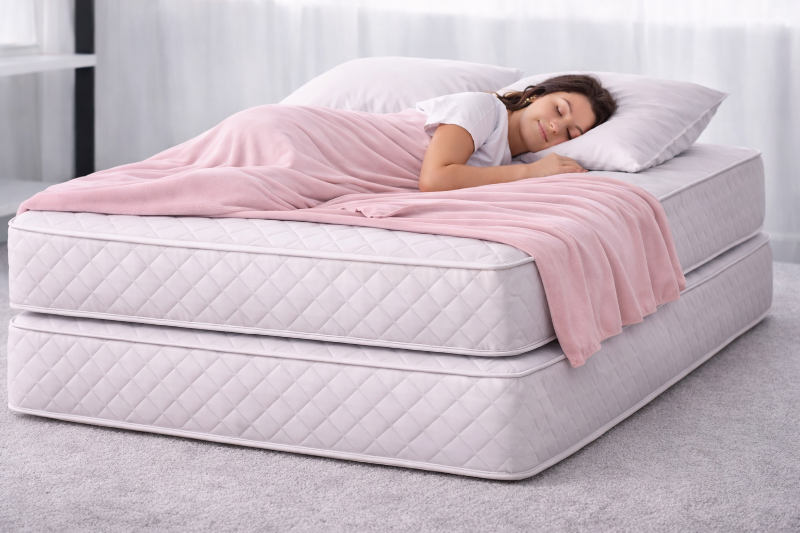
Stacking mattresses might seem like a quick fix that offers extra height, more cushioning, or a temporary sleeping solution when furniture is limited. It’s common in dorms, guest rooms, kids’ sleepovers, and even minimalist setups. But is it actually safe to sleep on stacked mattresses?
The short answer: sometimes, but there are important risks and limitations you should know about.
Why People Stack Mattresses
To understand whether sleeping on stacked mattresses is safe, it helps to first look at why people choose this setup in the first place. In most cases, stacking mattresses is a practical, space-saving solution meant for comfort or convenience rather than a permanent sleeping arrangement.
- To create extra height without a bed frame: Stacking mattresses can raise a sleeping surface off the floor, which may feel more comfortable or accessible, especially in rooms where a bed frame isn’t available or desired.
- To make a firm mattress feel softer: Adding a second mattress (often a softer one) can provide extra cushioning and pressure relief for sleepers who find their primary mattress too firm.
- For temporary sleeping arrangements: Stacked mattresses are commonly used for short-term situations such as moving, renovations, dorm living, or camping indoors when a traditional bed isn’t practical.
- To accommodate guests or children: During sleepovers or when hosting overnight guests, stacking mattresses can be an easy way to create additional sleeping space without investing in extra furniture.
- For floor-sleeping or minimalist living: Some people prefer minimalist or floor-based sleeping setups. Stacked mattresses can offer a balance between sleeping directly on the floor and using a full bed frame.
While stacking mattresses may appear harmless and convenient, the safety and comfort of this setup depend largely on how the mattresses are stacked, the surface underneath, and who is using them — all of which we explain later in this article.

Potential Safety Risks
Even with the practical benefits, convenience doesn’t always equal safety. Sleeping on stacked mattresses can introduce several potential risks that are important to understand before using this setup, particularly related to stability, support, airflow, and hygiene.
Instability and Sliding
Mattresses are not designed to lock together or remain stable when stacked. When placed on top of one another — especially on smooth or hard flooring — they can shift, slide, or separate during the night.
This instability increases the risk of falling off the stack, sudden movement while sleeping, or injury when getting in and out of bed.
Softer foam mattresses and uneven stacking tend to make this problem worse, as they compress more easily and offer less structural stability.
Poor Support and Spinal Alignment
Each mattress responds differently to body weight and pressure. When mattresses are stacked, the top mattress may sag unpredictably while the lower mattress compresses unevenly beneath it.
This can cause the body to sink in unnatural ways, leading to poor spinal alignment. Over time, improper support can result in back, neck, or joint pain, particularly for adults, heavier sleepers, or those who already experience physical discomfort. (Source)
Overheating
Stacked mattresses significantly reduce airflow, especially when they are placed directly on the floor. Limited air circulation can trap body heat, increase sweating, and create an uncomfortable sleeping environment.
Foam mattresses are especially prone to heat retention, which can make stacked setups feel excessively warm and disrupt sleep quality.
Moisture and Mold Growth
Lack of ventilation can also allow moisture to build up between mattresses or underneath the stack. Over time, this trapped moisture may lead to mold or mildew growth, unpleasant odors, and gradual mattress deterioration.
This risk is even higher in humid climates, poorly ventilated rooms, or basement sleeping areas, and it increases significantly when mattresses are stored in a stacked position for long periods of time.
Hygiene & Dust Accumulation
In addition to moisture issues, stacked mattresses can trap dust, allergens, and debris between layers. Without regular cleaning and airing out, this buildup may affect air quality and overall sleep hygiene over time.
That said, stacked mattresses aren’t automatically unsafe in every situation, particularly when they’re used thoughtfully.
When Stacked Mattresses Can Be Okay
Stacked mattresses can be reasonably safe in certain situations, as long as a few important conditions are met:
- The setup is temporary, not long-term: Stacked mattresses work best as a short-term solution, such as for guests, travel, or transitional living arrangements, rather than as an everyday sleeping setup.
- Mattresses are stacked evenly and flat: Both mattresses should lie completely flat and align properly to reduce uneven pressure, sagging, or shifting during sleep.
- The stack is placed on a non-slip surface: Using a rug, mat, or textured flooring underneath the mattresses can help prevent sliding and improve overall stability.
- The sleeper is an adult or a supervised child: Adults and older children are better able to adjust their position and avoid falls, making this setup safer for them than for very young sleepers.
- The mattresses are similar in size and firmness: Matching mattresses are less likely to slide or compress unevenly, providing more consistent support and reducing movement. The larger mattress should always be placed on the bottom, never on top of a smaller one.
For short-term use, such as hosting a guest for a few nights, this setup is generally fine when proper care and attention are taken. However, all of these conditions should be met for stacked mattresses to remain a reasonably safe option.
Who Should Not Sleep on Stacked Mattresses
Despite being acceptable in limited situations, stacked mattresses are not suitable for everyone. Infants and toddlers should never sleep on stacked mattresses due to the increased risk of suffocation and falls. Elderly individuals may also face higher risks, as instability and added height can make getting in and out of bed more dangerous.
Additionally, people with chronic back, neck, or joint issues are likely to experience discomfort or worsening pain due to the lack of consistent support and proper spinal alignment. For these groups, a stable, supportive bed setup is a much safer and healthier option.

Safer Alternatives to Stacking Mattresses
Those who need greater stability and long-term comfort can choose from several safer alternatives that provide the same benefits without the added risks.
Mattress Topper Instead of a Second Mattress
A high-quality mattress topper can soften a firm mattress or add extra cushioning without compromising stability. Toppers are designed to work with your existing mattress, providing pressure relief while maintaining proper support. They are also easier to remove, store, clean, and replace than an additional mattress.
For example, this mattress topper from BDEUS features a memory foam layer and a fitted cover with a total height of five inches, offering noticeable elevation. Its deep-pocket design helps keep the topper securely in place, reducing the risk of slipping or shifting during sleep.
Folding Bed or Rollaway Bed for Guests
Folding beds and rollaway beds are designed specifically for temporary use and offer a stable, self-contained sleeping surface. They often include built-in support systems that are far safer than stacking mattresses. When not in use, they can be easily stored away to save space.
For more ideas, check out our article on the best temporary beds. It covers a variety of options suitable for guests and other short-term sleeping needs.
Tatami Mat or Bunkie Board for Floor Setups
Tatami mats and bunkie boards provide firm, structured support for floor sleeping while allowing better airflow beneath the mattress. This helps reduce heat retention and moisture buildup. They also protect the mattress from direct contact with the floor, improving hygiene and durability.
Bed Frame or Platform for Elevation
A proper bed frame or platform raises the mattress off the floor while providing stable, even support. This helps maintain correct spinal alignment and reduces the likelihood of sagging over time. Elevating the mattress also improves airflow, which can help prevent moisture buildup and extend the life of the mattress.
As you can see, these alternatives offer similar benefits while providing better support, ventilation, and overall stability, making them far safer and more comfortable options than putting mattresses on top of each other.
Final Verdict: Is It Safe?
Sleeping on stacked mattresses can be safe in the short term, but it’s not ideal for regular or long-term use. The main concerns are stability, health issues, heat retention, and moisture buildup.
When stacking mattresses, the setup should be stable, well-ventilated, and used only as a temporary arrangement. For everyday sleep, investing in a properly supported mattress setup is always the safer — and more comfortable — choice.
Anyone left with an extra mattress they no longer need can explore options for proper storage, even in small spaces, or learn how to dispose of it responsibly through our related guides.
If you still have questions or want to share your experience, feel free to leave a comment below.