Imagine this: You’ve planned a big get-together with friends or family, and all that’s left is setting the table. You pull out your plastic tablecloth, only to find it covered in stubborn folds and creases. Now what?
Good news: You can get wrinkles out of a plastic tablecloth using a few simple methods. Whether it’s smoothing them out by hand, hanging it in the sun, using a hairdryer on a cool setting, ironing it safely, or even tumble drying on low heat, there’s a solution for every situation.
I’ve spent plenty of time wrestling with wrinkled plastic tablecloths myself, but once I discovered these tricks, everything changed. Below, I’ll walk you through the easiest ways to remove wrinkles and share a few tips to help you keep your tablecloth looking its best.
Let’s set the table — and smooth things over!
1. Smooth It Out by Hand
The simplest (and safest) way to start tackling wrinkles is with your hands, no tools or heat required. This should always be your first move before trying more involved methods.
Start by giving the tablecloth a good shake to loosen up any light creases. Then, lay it out flat on a clean surface and gently smooth it out with your hands, pressing firmly over the folds. For extra stubborn spots, you can add light pressure using a flat object like a book — just be careful not to stretch the plastic.
If the wrinkles are minor, this quick fix might be all you need.
2. Let It Hang in the Sun
Got a clothesline or a sunny spot outside? Hanging your plastic tablecloth is one of the easiest and most hands-off ways to smooth out wrinkles — just let nature do the work.
Drape the tablecloth over a clothesline, porch railing, or balcony ledge, making sure it’s spread out as evenly as possible. The combination of sunlight and gravity will help relax the plastic and gently pull the folds out. For best results, place it in direct sunlight, but be patient — depending on the thickness and material, it might take a few hours.
No clothesline? No problem. Use any sturdy outdoor surface, just avoid shaded areas where the process will take much longer.
3. Blow the Wrinkles Away With a Hairdryer
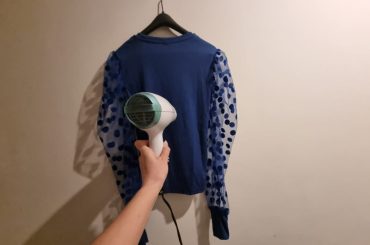
If you’re short on time and need a quick fix, grab your hairdryer. With a little warm air and some gentle smoothing, you can flatten out those creases fast.
Here’s how to do it:
- Lay your tablecloth flat on a table or ironing board. You can weigh down the corners with books or plates to keep it in place.
- Set your hairdryer to the lowest heat setting and hold it about a foot away from the surface.
- Slowly move the dryer back and forth across the wrinkled areas, keeping it in constant motion. Use your other hand to gently press and smooth the plastic as it warms.
Important: Never hold the hairdryer in one spot for too long as plastic can melt quickly! Keep the air moving and stay on the lowest setting to play it safe.
4. Iron It (the Right Way)
If you don’t have a hairdryer, you could always use an iron to remove the folds from your plastic tablecloth.
You will need the following items for this method:
- Iron
- Ironing board or large table
- Clean, wet towels
Once you’ve gathered the above items, follow the steps below to remove the wrinkles:
- Lay one or two damp towels on your ironing board or table to protect both the surface and the tablecloth.
- Spread the tablecloth flat over the towels and smooth it out by hand.
- Place another layer of damp towels on top of the tablecloth.
- Set your iron to the lowest heat setting with steam enabled. Gently run the iron over the top towels, moving it steadily and not staying in one spot too long.
The steam and light pressure will help relax the plastic without risking damage. Check your progress by carefully lifting the top towel layer. If needed, replace and repeat until smooth.
Be extra cautious, a few seconds of heat should do the trick!
5. Place the Tablecloth in Your Dryer
Despite what common sense might suggest, you can put your plastic tablecloth in the dryer to get rid of the wrinkles. However, this is the most challenging heat method and poses the most significant risk to the tablecloth.
Here’s how to do it safely:
- Set your dryer to the absolute lowest heat setting.
- Toss in the plastic tablecloth along with a few damp towels (these help buffer the heat and create steam).
- Run the dryer for just a few minutes at a time, checking frequently. As soon as the tablecloth warms up, take it out and smooth the wrinkles by hand while it’s still warm.
- Repeat the process if needed, but never leave it unattended for long. Plastic can melt fast, and you don’t want it fusing to your towels (or your dryer!).
Alternatively, if the wrinkles are minor, you can drape the tablecloth over a running dryer (not inside it). The heat rising off the machine can help soften the folds. Just be sure to keep checking so nothing overheats or warps.
This method works, but it’s the most high-risk option. Use it as a last resort, and proceed with caution!
6. Use Steam From a Shower
Need a quick, low-effort fix? Let your shower do the work! Steam is a gentle way to relax wrinkles — no appliances required.
Here’s how:
- After your shower, smooth out the remaining wrinkles by hand while the plastic is still warm and pliable.
- Hang your plastic tablecloth in the bathroom over a towel bar, shower rod, or any spot where it can hang freely without bunching.
- Run a hot shower with the door closed to trap the steam.
- Let the steam build up for 10–15 minutes while the tablecloth softens.
Make sure the tablecloth isn’t touching the floor of the tub or wet surfaces — it just needs the steam, not a soak!
This is a great last-minute trick when you’re short on time or don’t want to mess with heat tools.

Wrinkled Plastic Tablecloth: FAQs
Now that you know how to smooth out wrinkles from a plastic tablecloth, let’s go over some frequently asked questions to help you care for it even better.
How Do I Prevent Wrinkles While Storing a Plastic Tablecloth?
The best way to prevent wrinkles is to store the tablecloth flat. While this takes up more space, it keeps creases from forming and saves you time later.
If flat storage isn’t an option, loosely roll the tablecloth instead of folding it. For extra protection, slide it into a mailing tube or wrap it in kraft paper to help it hold its shape.
If you must fold it:
- Avoid stacking anything heavy on top.
- Store it on top of other items, not underneath them.
- Keep it in a low-compression area to reduce pressure on the folds.
A little care during storage goes a long way in keeping your tablecloth looking fresh and party-ready.
Is It Really Safe to Warm Plastic With an Iron or Dryer?
Yes, it can be safe — but only if you’re careful.
When we hear about the dangers of heating plastic, it’s usually in the context of food safety — like microwaving plastic containers, which can release harmful chemicals into food. With tablecloths, you’re not eating off them while they’re warm, so that concern doesn’t apply.
However, you still need to be cautious. Always use the lowest heat setting on your iron, dryer, or hairdryer, and check for any manufacturer guidelines on heat safety. Never leave the tablecloth unattended while applying heat.
Important: If part of the plastic melts, it can release fumes that aren’t safe to inhale. If that happens, take the damaged tablecloth outside immediately and let the space air out before cleaning up or disposing of it.
Bottom line? Low, controlled heat = okay. High, direct heat = risky.
I Accidentally Melted Part of the Tablecloth! Can I Repair It?
Unfortunately, the damage is already done. Unlike fabric, melted plastic can’t be patched or stitched, and the damage (holes, warping, or hardened spots) is usually permanent.
The upside? Plastic tablecloths are usually affordable and easy to replace, so it’s not a huge loss if one gets damaged.
If the melted plastic stuck to your table or ironing surface let it cool completely, then gently scrape it off. Be careful not to damage the surface underneath, but this is usually the safest and easiest cleanup method.
Lesson learned: go low and slow with the heat!
Are PVC Tablecloths the Same As Plastic Tablecloths?
Yes, in most cases. PVC (short for polyvinyl chloride) is a type of plastic, and many plastic tablecloths are made from it. In fact, when you see tablecloths labeled simply as “plastic,” there’s a good chance they’re made of PVC.
Manufacturers sometimes use the term “plastic” because it’s more familiar to shoppers, but PVC and plastic tablecloths are generally the same thing — durable, wipeable, and water-resistant.
Are Oilcloth Tablecloths Lined With Plastic?
While it’s true that they feature exterior layers of plastic, you cannot treat oilcloth the same way you would treat PVC. That’s because at its center is a heavy cotton sheet.
As a result, it needs to be cared for differently. Usually, an oilcloth tablecloth only needs to be wiped clean with a damp cloth.
Wrap-Up: Smooth Table, Smooth Vibes
Plastic may last forever, but wrinkles in your tablecloths don’t have to. With just the right mixture of heat and weight, you can press out the folds and creases just like you would with fabric.
If you follow our methods carefully, you can get years of use out of your plastic tablecloths — and they’ll look great, too!